Vertical Basement Wall Cracks
A vertical crack runs straight up the wall. Concrete shrinking as it cures usually causes it, and it is the crack we see most. Most vertical cracks are not structural, but they can still let water in.

We inject epoxy or polyurethane resin through the full thickness of your foundation wall, not just the surface. The repair is structural, and it carries a lifetime no-re-leak guarantee.
4.9 out of 5 stars
Eleven winters of moving boxes to higher ground, and this January the floor was bone dry through a week of steady rain. The crew laid plastic over everything, hauled the spoil out by bucket and swept up each evening. Marcus explained the cove joint problem in a way that finally made sense.
Two other companies wanted to tear up my entire basement floor. These guys looked at it and said the water was coming through two cracks, injected both, and charged a fraction of what I was quoted elsewhere. Two wet seasons later, still dry. They diagnosed instead of selling.
The musty smell in our bedrooms is completely gone, that alone was worth it. Humidity went from 78% to 47%, the floors are noticeably warmer through the winter, and our PGE bill dropped. Honestly did not expect the energy difference.
Our kitchen floor had been bouncy for years and I assumed it was just an old house. Turned out three joists had rotted at the sill. They sistered them, set proper piers, and the floor is solid for the first time since we bought the place.
Excellent work and the water intrusion is completely resolved. Only reason for four stars is scheduling slipped by about a week during the November rush, though they were upfront about it and knocked something off the invoice.
Called at 6am during an atmospheric river with water coming in. They had someone here before nine to look at it and did not gouge me on emergency pricing. The permanent fix went in the following week and I have not thought about the basement since.
They did the structural work first and then sealed it, and explained exactly why that order mattered. Another company had quoted just the liner, over rotted joists. Glad I got a second opinion. The house sold without a single crawl space comment from the inspector.
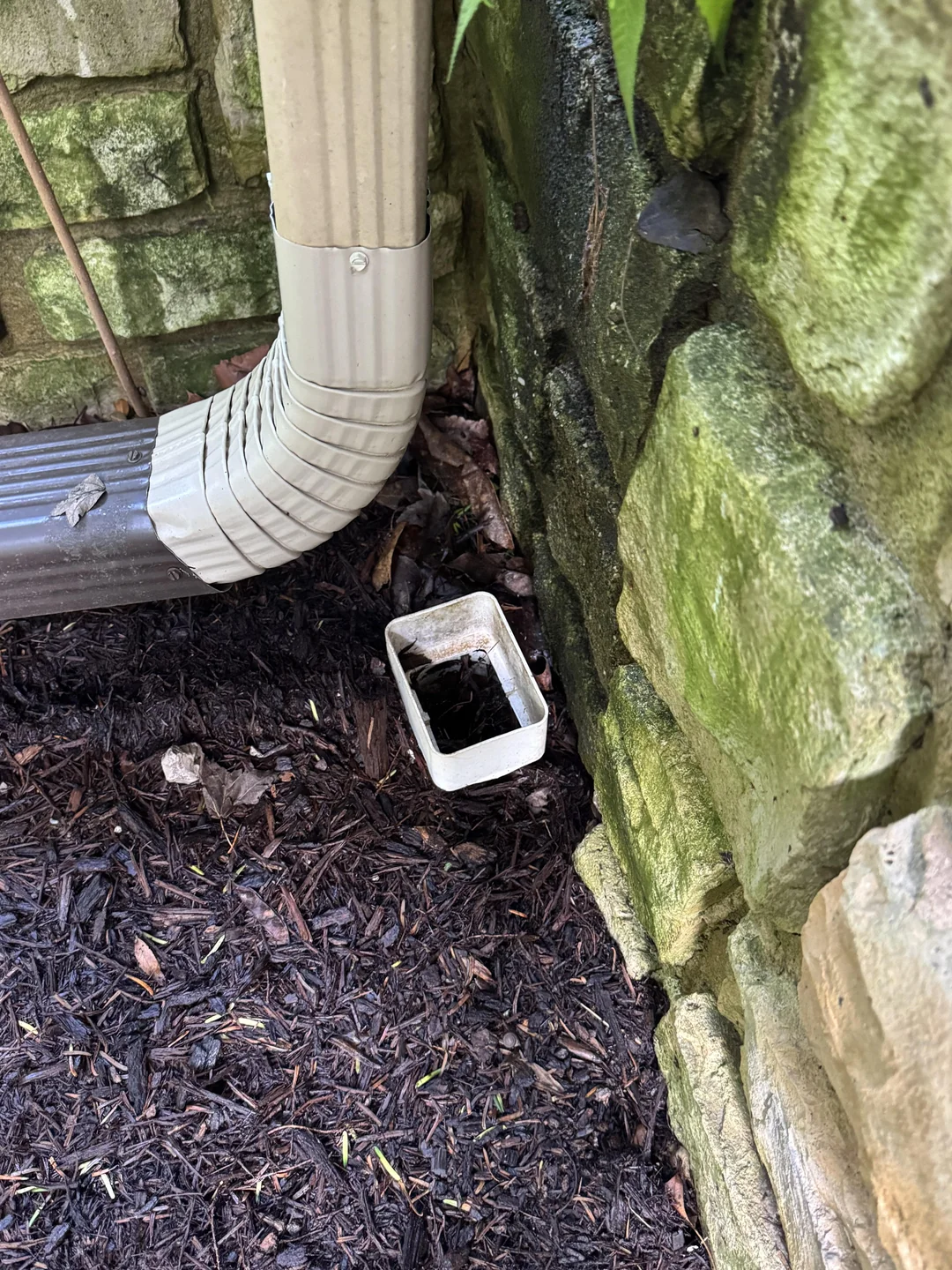
They came out, spent forty minutes, and told me my problem was a downspout dumping straight against the foundation instead of into the drain line, a $40 fix I could do myself. Did not try to sell me a thing. When I do need real work done, there is no question who I am calling.
Ninety-year-old house that had never had anything done to it. They worked straight through January in the rain, which I did not think was even possible, and kept the site cleaner than I expected. Clear pricing and written moisture readings at the end.
One corner of the house had been sinking for years and I kept putting it off. They found the cause during the inspection, explained push piers versus helical piers in a way I actually understood, and the door that never closed right now shuts like new. Wish I had called sooner.
Basement crack repair seals the exact spot where water enters your basement. A poured foundation wall almost never leaks across its whole face. It leaks at 1 or 2 open cracks, and closing those cracks stops the water without disturbing the rest of the wall. Water coming in along a line instead of a single spot points to hydrostatic pressure (opens in a new tab), and the two get diagnosed differently.
Portland rain is the main reason foundations crack here. Clay soil around your foundation soaks up water from October through May and barely dries out between storms. Concrete under that kind of steady push for 30 years cracks more than concrete in a drier state.
We inject resin at low pressure so it reaches the full thickness of the wall instead of blowing out the front face. Once resin shows up on the outside of the wall, the gap is filled and water has no path left to follow.
A crack that only dripped last January can run steadily this year once the wet season sets in. If the crawl space under the same house feels damp, that is a separate job called crawl space encapsulation, not crack injection.
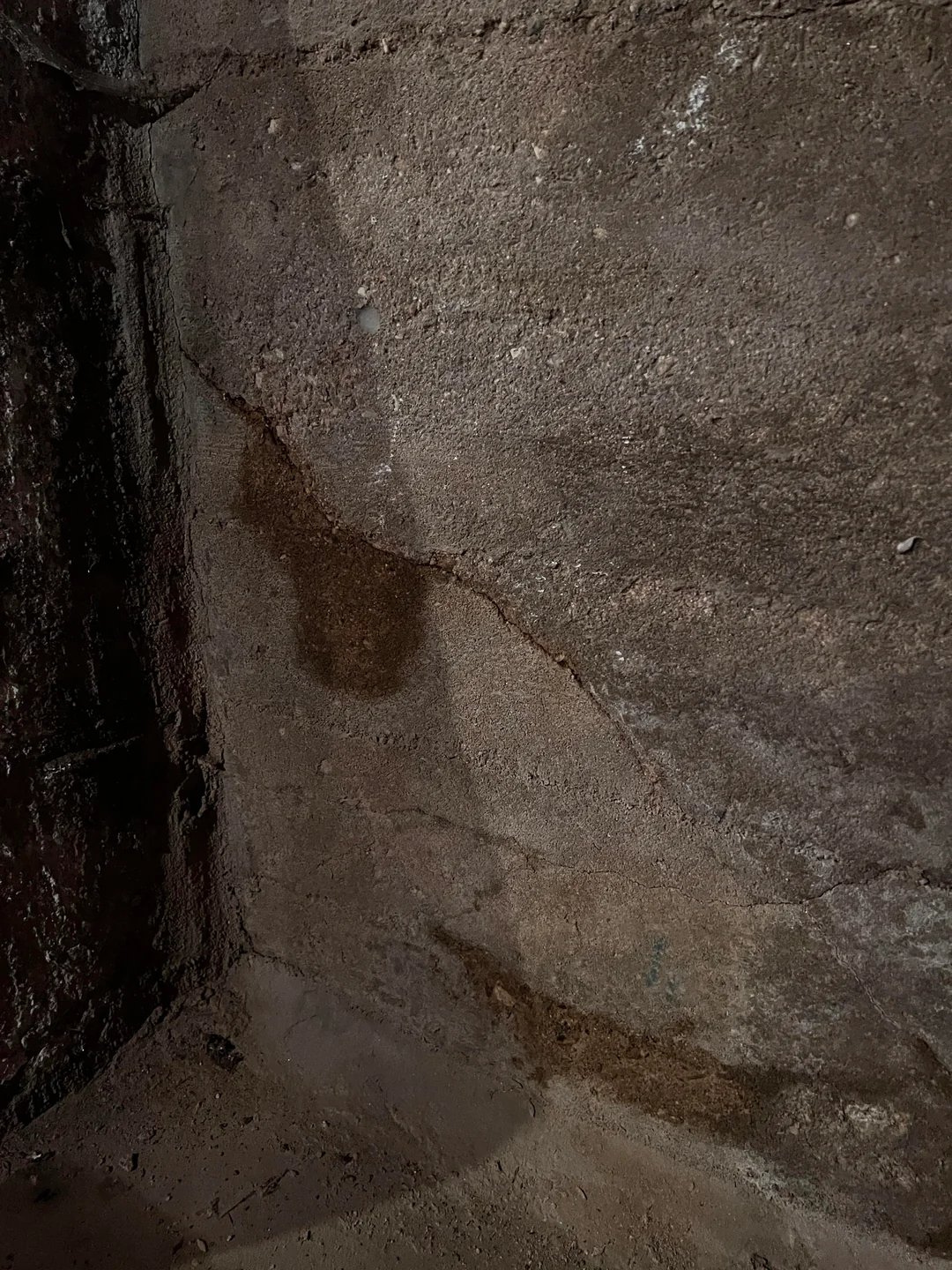
A vertical crack runs straight up the wall. Concrete shrinking as it cures usually causes it, and it is the crack we see most. Most vertical cracks are not structural, but they can still let water in.
A horizontal crack runs sideways across the wall. If the wall also bows inward above the crack, soil pressure is pushing on it. That needs a fast look, not a simple patch.
A stair-step crack follows the mortar lines in a block or brick wall in a zigzag shape. It means one side of the foundation has settled more than the other side.
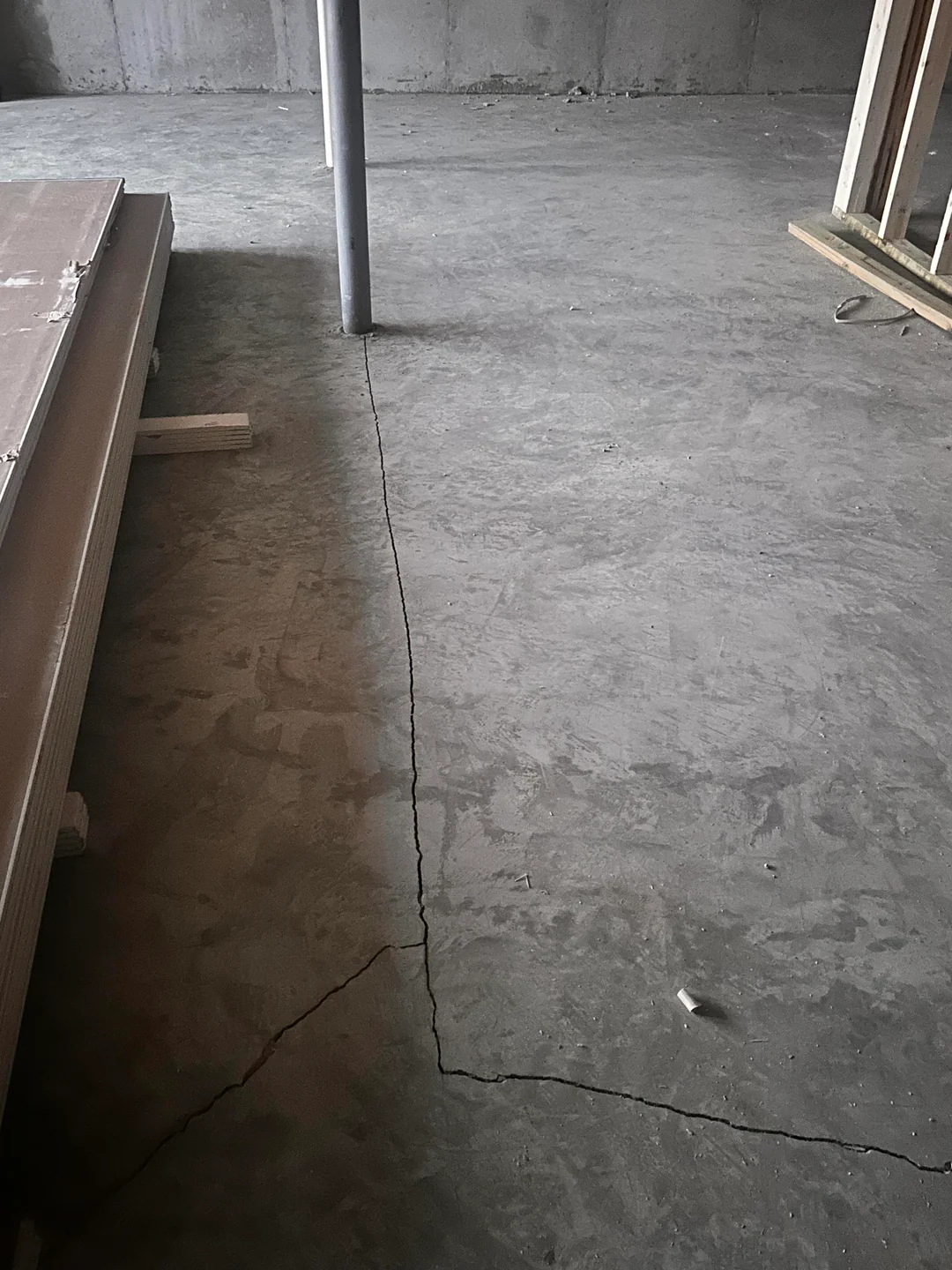
A crack in the slab itself usually comes from shrinking concrete or ground settling underneath. Most floor cracks are not structural, but a wide or uneven one should get checked.
Any crack above can leak once water reaches it. A leaking crack almost always comes from 1 or 2 exact spots, not damage across the whole wall.
Soil under a foundation moves as it takes on water and dries out again. When one part of the house settles more than the rest, the concrete cracks to release that stress.
Wet Portland soil pushes on a foundation wall for months at a time. Engineers call this hydrostatic pressure, and it keeps pushing until the wall gives way at its weakest point.
Concrete shrinks a small amount as it cures, and that alone causes most hairline cracks. Older foundations have also gone through more wet and dry cycles, so they show more cracking than a new pour.
We inject polyurethane resin at low pressure, and it expands to fill the crack through the full wall thickness. It flexes slightly with the concrete, so we choose it for a crack that is actively leaking.
Epoxy cures hard and bonds to the concrete around it. We use it on cracks that need strength restored, not just sealed, since cured epoxy is stronger than the concrete around it.
A crack next to a bowing wall needs more than injection alone. We add carbon fiber strips across the wall to stop further movement, then seal the crack so water has nowhere left to go.
Basement waterproofing, basement crack repair, crawl space encapsulation and crawl space repair for homeowners inside the city of Portland, Oregon.
Explore Service
We seal your crawl space floor and walls with a 20-mil vapor barrier, insulate the rim joists, and hold humidity under 55%. A damp dirt crawl space becomes clean, dry space you can actually use.
Explore Service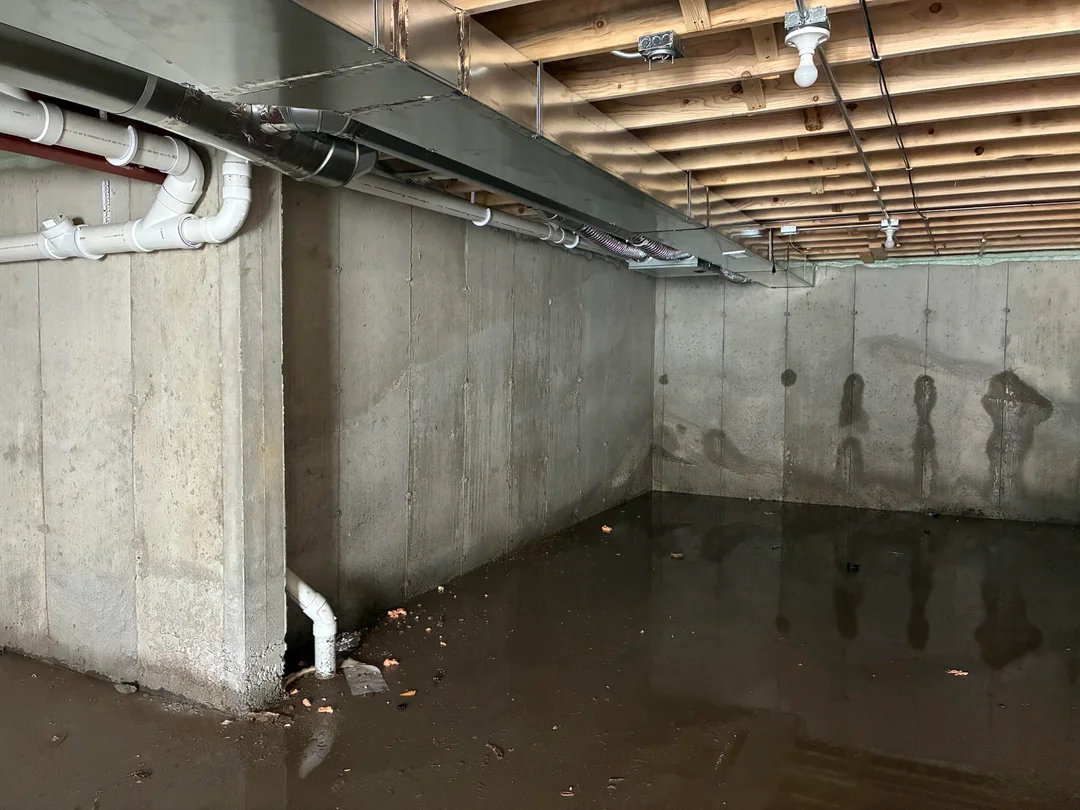
We repair rotted joists, sagging floors, failed insulation and settled piers before a crawl space gets sealed and left alone. Structural work always comes first.
Explore ServiceA crack that weeps a little now will carry more water with each wet season. Sealing it early keeps moisture away from your framing, insulation and stored items.
An open crack widens a bit more every year as the soil around it swells and shrinks. Wait longer, and the repair gets bigger and more expensive.
Water that reaches the steel inside a wall causes it to rust. That turns a simple sealing job into a structural repair, so fixing the crack early keeps the problem small.
The damage moves in steps, not gradually. Below are the 5 things that keep happening if you wait, set against the 5 that change once the work is done.
The inspection that gives you a price is free. The proposal after it is a fixed price in writing, not an estimate that grows once the crew shows up. 0% financing runs for 18 months on any project.
Get My Free Written EstimateWe check the crack’s width, direction, and whether it is still moving. If we suspect it is active, we fit a monitor before we quote the fix.
The diagnosis decides the resin. We use polyurethane for an active leak, epoxy for a structural crack, and reinforcement first if the wall is bowing.
We place ports every 6 to 8 inches (15 to 20 cm) along the crack and push resin in at low pressure so it fills the wall through its full thickness.
Once the resin cures, we remove the ports and grind the surface smooth. We wet-test the repair before we leave and register your warranty.
Choosing a contractor for basement crack repair comes down to 2 questions: is the problem still solved in 10 years, and is the company that promised it still answering the phone. We have been answering since 1994. Portland homeowners pick us for 4 reasons, listed below.
We carry an active Oregon contractor license, bond and insurance, so you can check us out before you let a crew into your basement. Since 1994 we have waterproofed 9,800 properties across the city of Portland.
We are a Portland business, not a national franchise. We know this ground, from flood silt on the east side to hillside seepage above Burnside, because we have already dug into it.
Every technician is our own employee, background-checked and trained on our own systems. We test, measure and diagnose before we quote, and we cancel proposals regularly once the real fix turns out to be a downspout extension.
Every system carries a lifetime warranty that covers labor and materials, not just parts. It transfers once to the next owner at no cost, which turns a wet-basement history into a selling point instead of a repair bill.
Sellwood, Portland
Quoted five figures for full-perimeter work by two other firms. The water was coming through two cracks.
Montavilla, Portland
Water arriving through a single crack under real pressure, plus a crawl space at 74% humidity feeding the whole house.
Horizontal cracks with an inward-bowing wall are the ones to worry about, and usually point toward foundation repair rather than a simple seal. Stair-step cracks wider than a quarter inch (6 mm), and any crack with offset between the two faces, point to the same problem. Those need a structural look. A vertical hairline crack is the common, harmless kind. It can still leak, but it does not threaten the building.
Yes, in almost every case. A vertical crack usually comes from normal concrete shrinkage. A horizontal crack means the wall is under sideways pressure from the soil outside, and it often comes with the wall bowing inward. That is a structural problem, not a simple leak.
Yes, and we repair most cracks this way. Injection from inside fills the crack through the full wall thickness without digging up the yard. Only a small share of jobs, usually where the wall itself needs outside reinforcement, call for exterior work.
Use polyurethane (opens in a new tab) for a crack that is actively leaking, since it flexes and expands to fill the gap. Use epoxy (opens in a new tab) for a structural crack, since it cures hard and bonds to the concrete, restoring strength instead of just sealing water out. We decide which one fits during the inspection, based on what the crack is actually doing.
Not along the same line. Cured resin is stronger than the concrete around it, so that exact crack does not reopen. If the soil movement behind it keeps going, the wall can crack somewhere else. That is why we look at what is driving the movement, not just the crack in front of us.
Hydraulic cement from a hardware store is a surface patch. It looks fixed for a season, then water finds the edge of the patch and comes in around it. Injection fills the gap through the wall, so there is no edge left for water to find.
Half a day for most jobs. Two cracks in the same visit usually still finish in an afternoon. A crack that needs reinforcement before sealing takes longer, since we stabilize the wall first.
The same day. Once we remove the ports and grind the surface smooth, the wall is paintable and ready to frame or finish whenever you are.
Need Basement Crack Repair? We Are Always Ready
Our crew is one call away. We know how stressful this gets, so we run 24/7 emergency dispatch across Portland and give you a fixed price before any work starts.
Portland ZIP codes we cover
Water in the basement, a foundation crack you have been watching, or a crawl space nobody wants to open. Get a straight diagnosis from BWP Portland, with fast response, fixed pricing and workmanship guaranteed for life across the city of Portland.