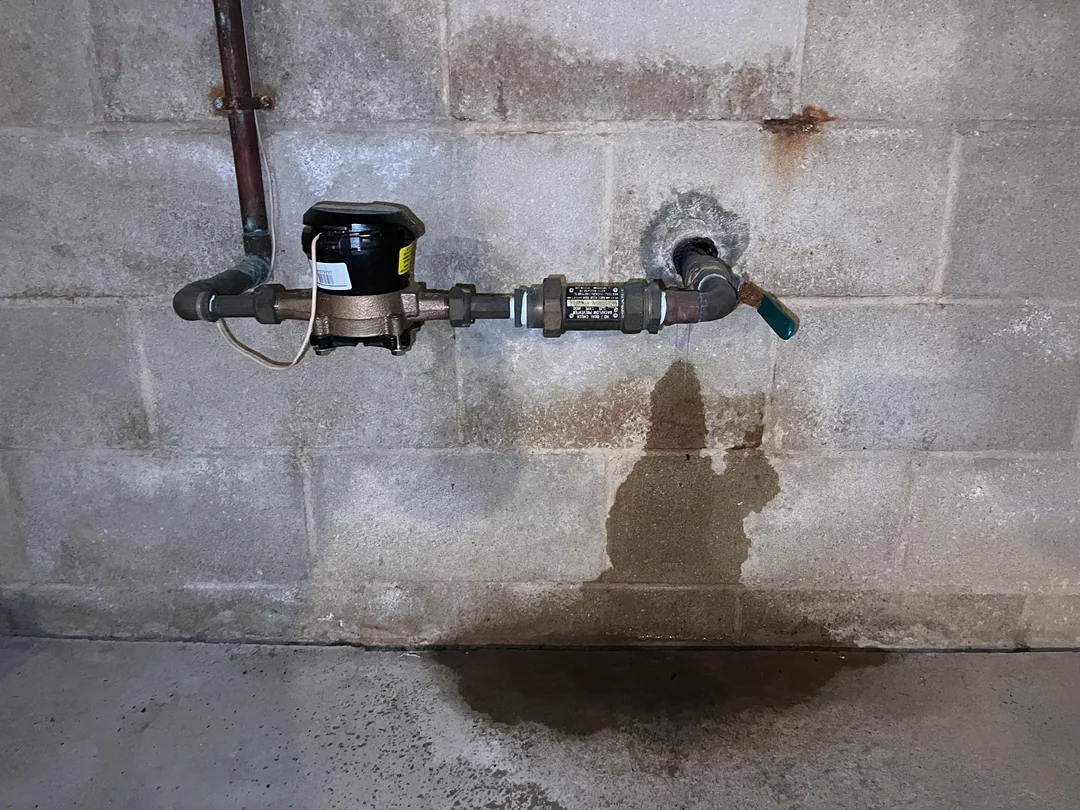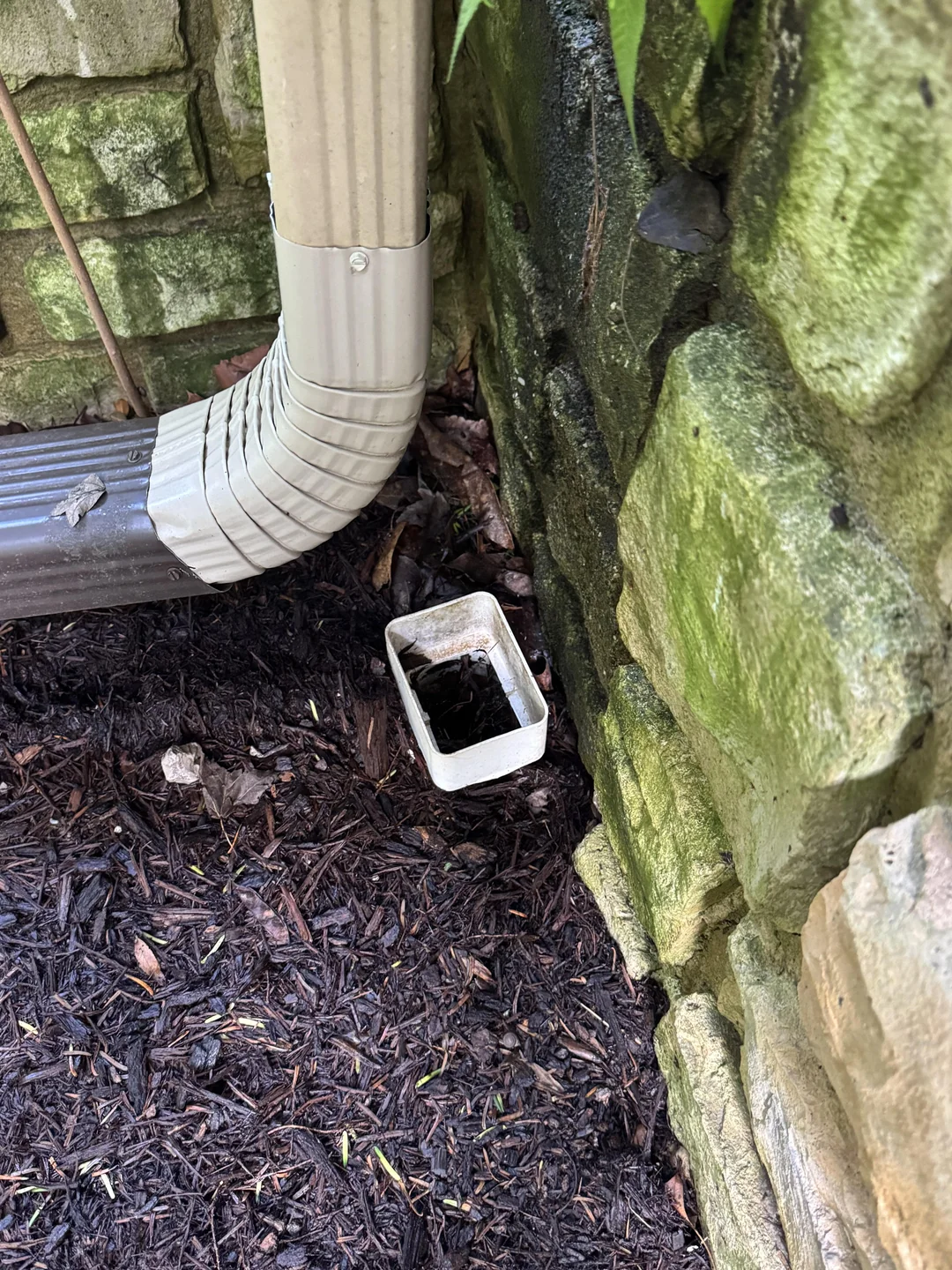
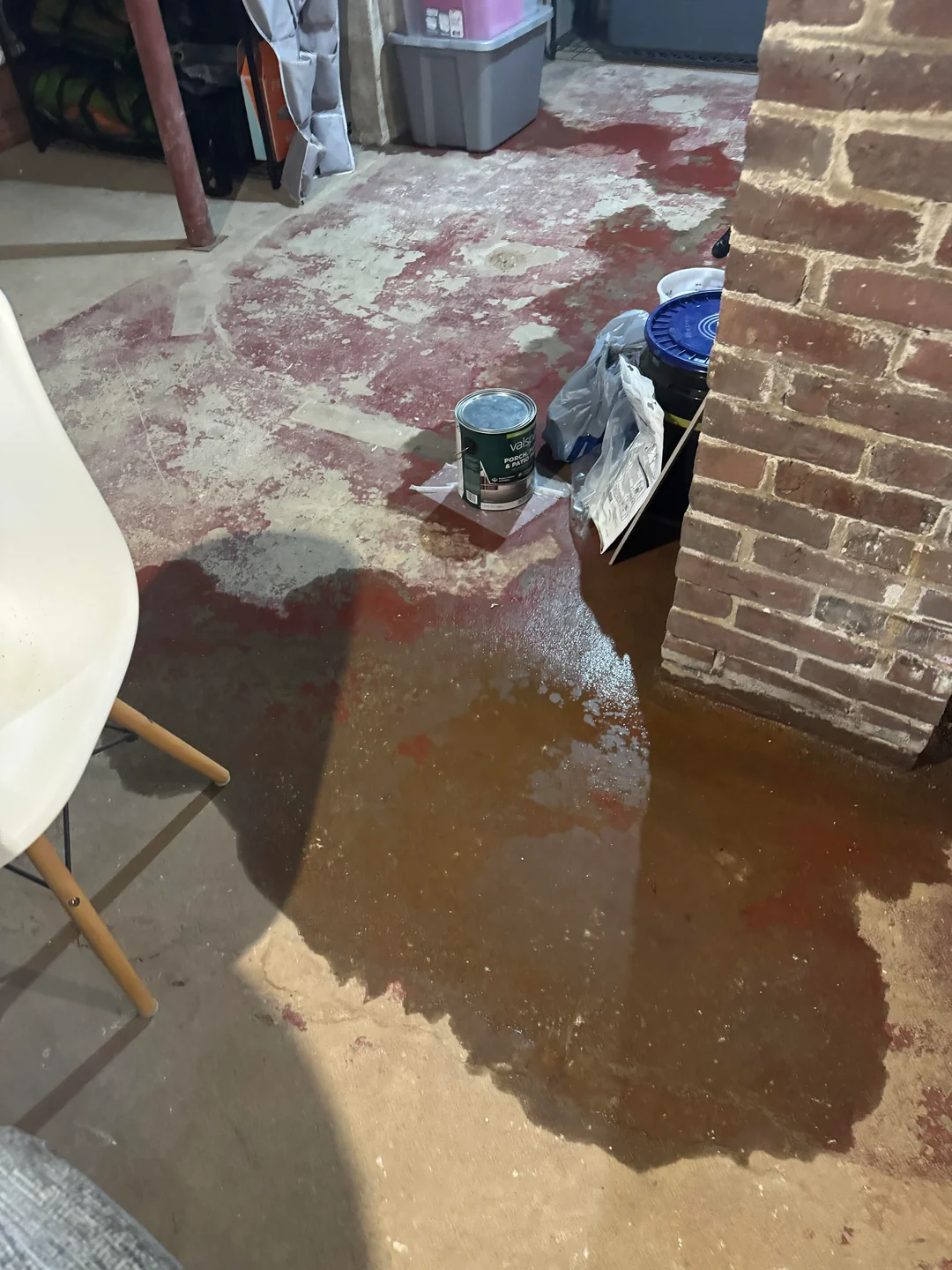
Standing water is the last symptom, not the first. By the time you are running a shop vac in January, the foundation has usually been telling you about it for two or three years.
This page is the short version of each warning sign, so you can work out which ones you have. Where a sign has its own guide, the link takes you to the causes and the fix in full.
1. A white chalky bloom on the walls
That is efflorescence, mineral salts left behind as water evaporates through the concrete. It is harmless in itself, but it shows moisture is moving through the wall, and it comes back after you brush it off. If it shows up after storms, compare it with the usual ways water gets in after heavy rain.
2. A musty smell that never fully leaves
A basement that smells like a damp towel has humidity above 60% somewhere, which is the line the EPA’s mold guidance (opens in a new tab) draws too. In a closed-up Portland winter that air reaches your bedrooms, so a musty smell in the basement is worth tracing to its source.
3. A dark line where the wall meets the floor
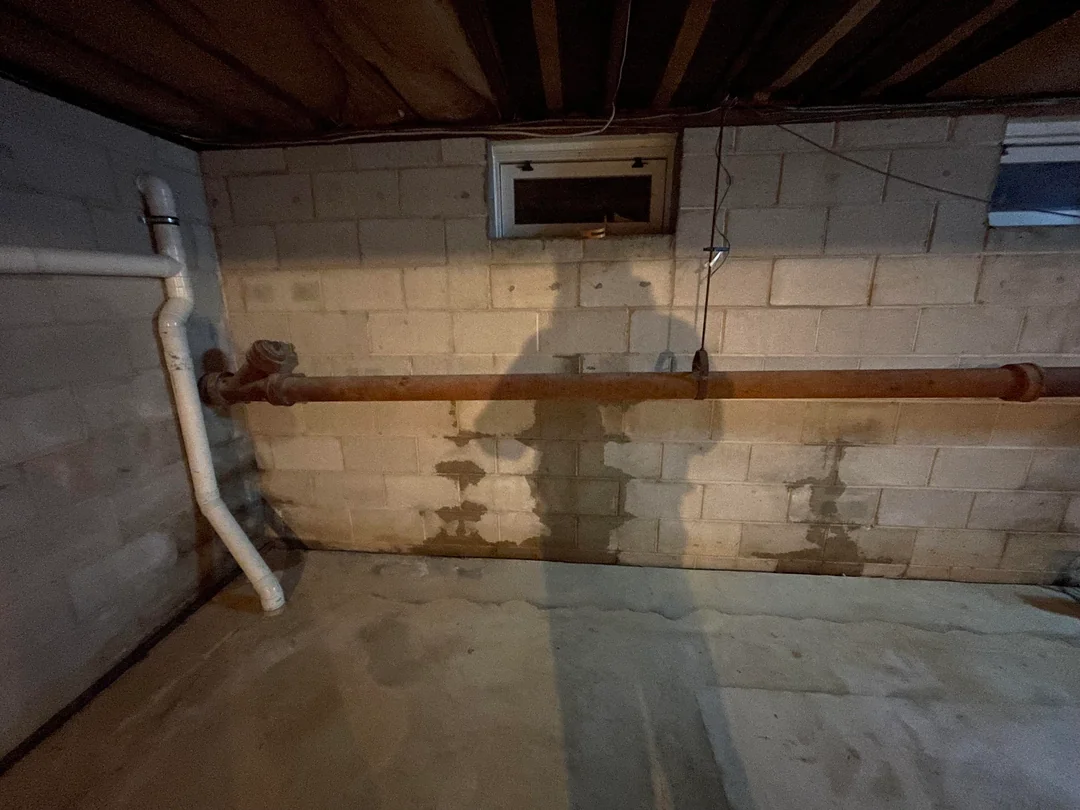
The cove joint is the single most common entry point in Portland. A stain there after weeks of rain is pressure-driven water, not condensation, and a basement leaking where the floor meets the wall are usually a pressure problem rather than a crack.
4. Peeling paint or bubbling floor finish
Coatings fail from behind when moisture pushes out through the slab or wall. If floor paint keeps lifting, the water is under it, and it is coming up through the basement floor rather than anything a new coat will hold back.
5. Rust at the base of appliances or steel posts
Rust rings on a furnace base, a water heater or a steel post mean the slab gets wet now and then, even if you have never seen standing water. It is the same rising-moisture problem as sign 4, caught earlier.
6. Doors and windows that stick seasonally
Doors that bind in midwinter and swing freely in August mean the foundation is moving with soil moisture. A little is normal on Portland clay, but movement that grows each year is a foundation repair question, not a waterproofing one.
7. Cracks that are getting wider
Mark each end of a crack with a pencil and a date, and photograph it monthly. Static cracks are almost always cosmetic; growing ones become water pathways, and full-depth crack injection is the repair that removes them rather than covering them.
8. Bouncy floors above a crawl space
A floor that flexes as you cross it means the framing underneath has lost strength, almost always from years of moisture under the house. That is a crawl space repair job before it is a sealing job.
9. Insects that prefer moisture
Silverfish, centipedes and pill bugs are a free humidity reading. A sudden population in a dirt crawl space usually points at encapsulation rather than pest control, once any standing water in the crawl space has been dealt with first.
What to do with this
If you recognize three or more, get a moisture assessment before the rain sets in. Diagnosis is free, it takes about forty minutes, and knowing which signs you have decides whether you are looking at a $600 fix or a $30,000 one. The Portland cost breakdown sets out both ends of that range.
Finding out in September is far better than finding out at 2am in January, which is what the rainy season checklist is designed to prevent.