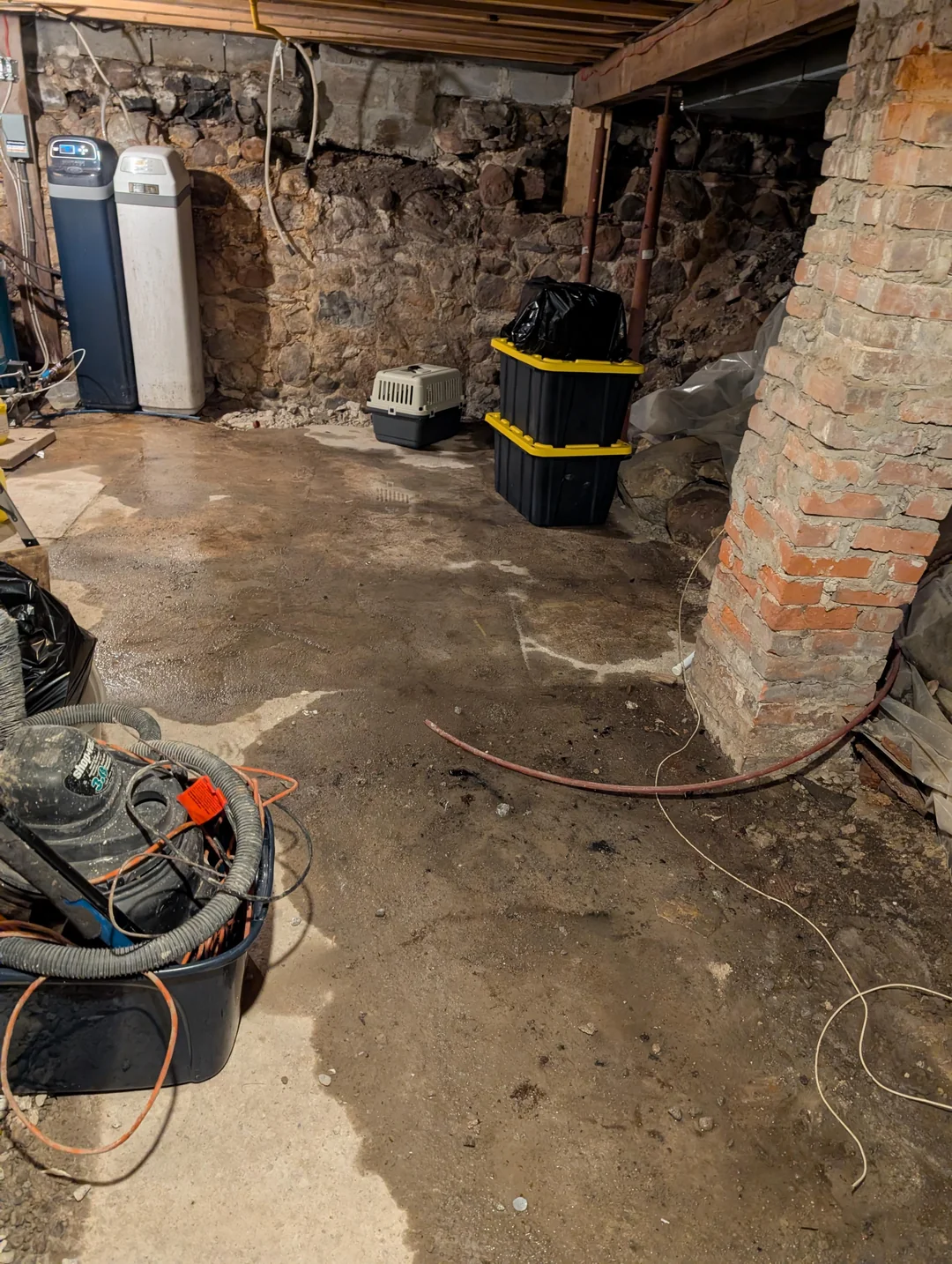
Our emergency call volume multiplies by roughly six between November and February. Portland takes around 36 inches of rain a year and roughly three quarters of it falls in the wet half of the calendar, which you can check against NOAA’s climate records (opens in a new tab) . The damage is not done by any single storm. It is done by the fact that the ground never dries out between them, so by December the soil around your foundation is holding all the water it can and the next atmospheric river (opens in a new tab) has nowhere to put the rest. A meaningful share of those calls trace back to something that would have taken ten minutes to check in September.
Here is the walkthrough. Give it forty-five minutes on a dry weekend before the rain sets in, and watch the incoming systems on the National Weather Service office that forecasts for Portland (opens in a new tab) .
Outside the house
Clean the gutters properly. Not just the troughs, flush the downspouts until water runs freely out the bottom. Do it after the leaves are down, around late October, not before. A gutter packed with big-leaf maple in November overflows down the wall for the next five months, which is a waterfall aimed at your foundation every time it rains.
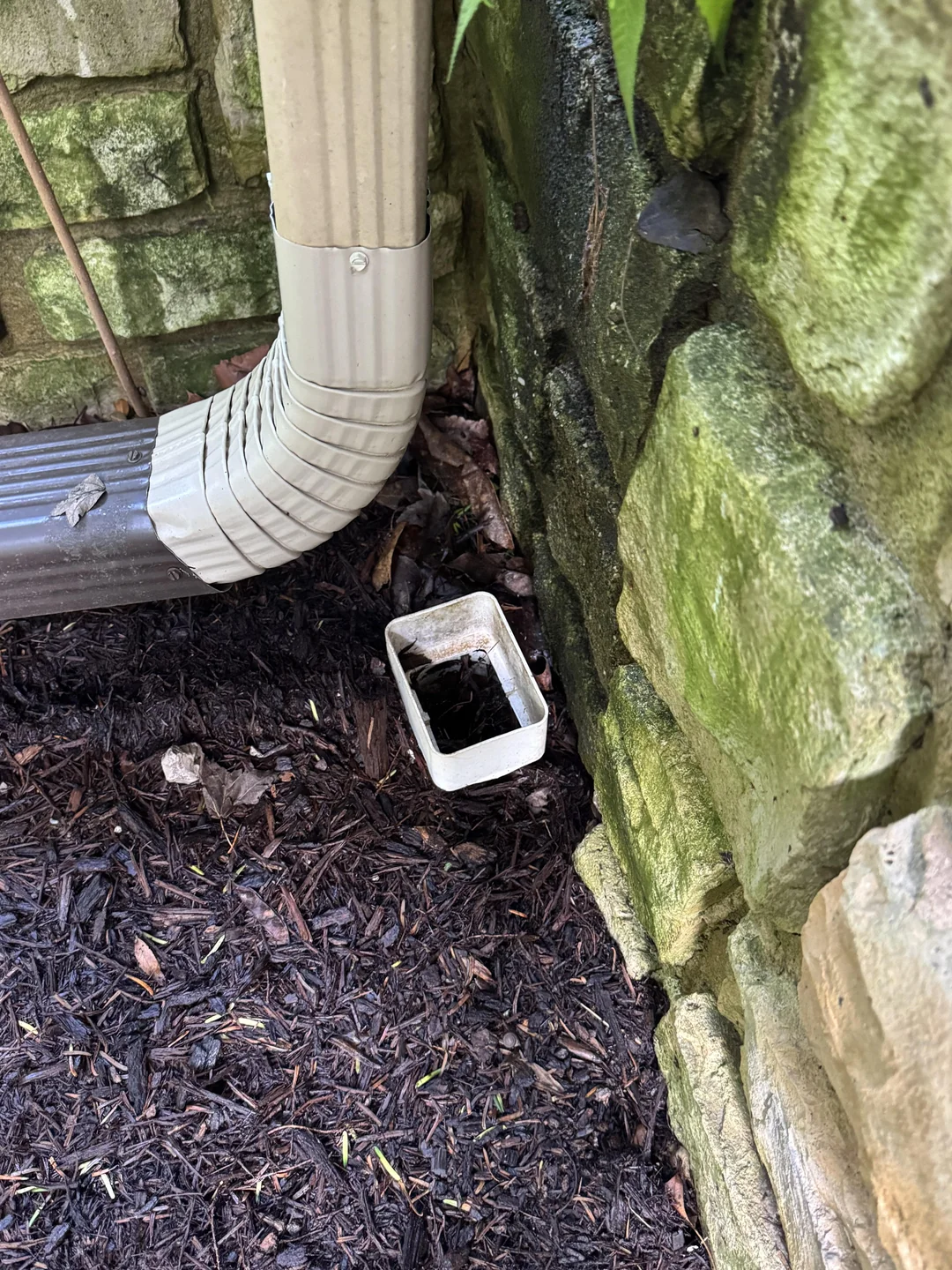
Find out where your downspouts actually go. Most older Portland houses have buried downspout lines, and a good share of them are broken, root-filled or discharging straight into the soil a foot from the wall. If water backs up at the top of the standpipe during a downpour, that line is blocked. Where there is no line, extend to eight feet minimum and ten if you can, which costs about fifteen dollars per downspout and is the single highest-value item on this list. A working footing drain (opens in a new tab) cannot help you if the roof is emptying inside its radius.
Check the grade. Soil should fall roughly one inch per foot for the first six feet from the wall. Settled soil next to the foundation becomes a standing pond that never drains between storms. Add soil, not bark dust, which holds water against the wall all winter. Much of inner Portland sits over dense clay (opens in a new tab) , and that clay is why rain here travels sideways instead of draining down.
Look at the window wells. They should have drainage stone at the bottom and covers on top. A well full of wet leaves is a bucket held against your basement window for the whole wet season.
Check the sump discharge, if you have one. Make sure it runs well clear of the house and is not pumping into the same saturated ground it just came out of, which is a loop we find every year.
Inside the basement
Walk the crawl space, if you have one. Take a flashlight and look at the joist ends where they bear on the sill plate (opens in a new tab) , that is where rot starts and where it matters most. Press a screwdriver into anything dark or soft. If it goes in without resistance, that joist has lost section, and that is a crawl space repair rather than a maintenance item.
Check what the insulation is doing. Fiberglass batts hanging down or lying in the dirt are finished. They hold water, have lost all R-value (opens in a new tab) , and are feeding whatever is growing down there. They need to come out and get replaced, and sealing the space properly is what stops it happening again.
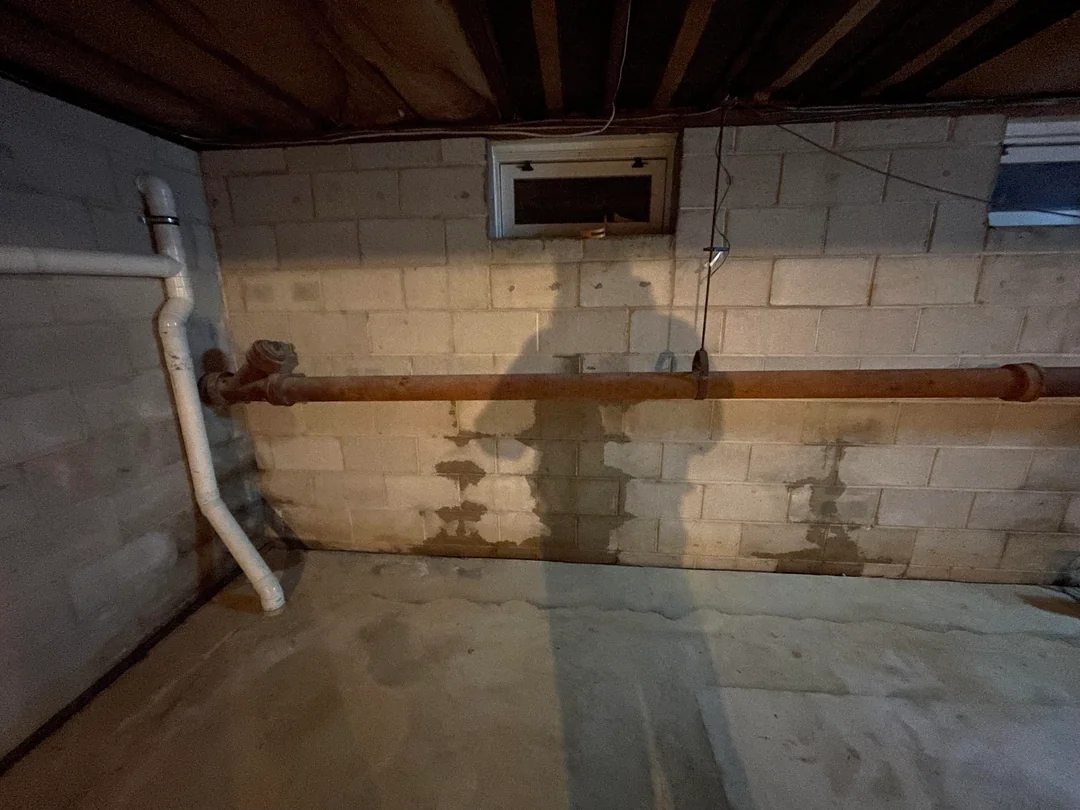
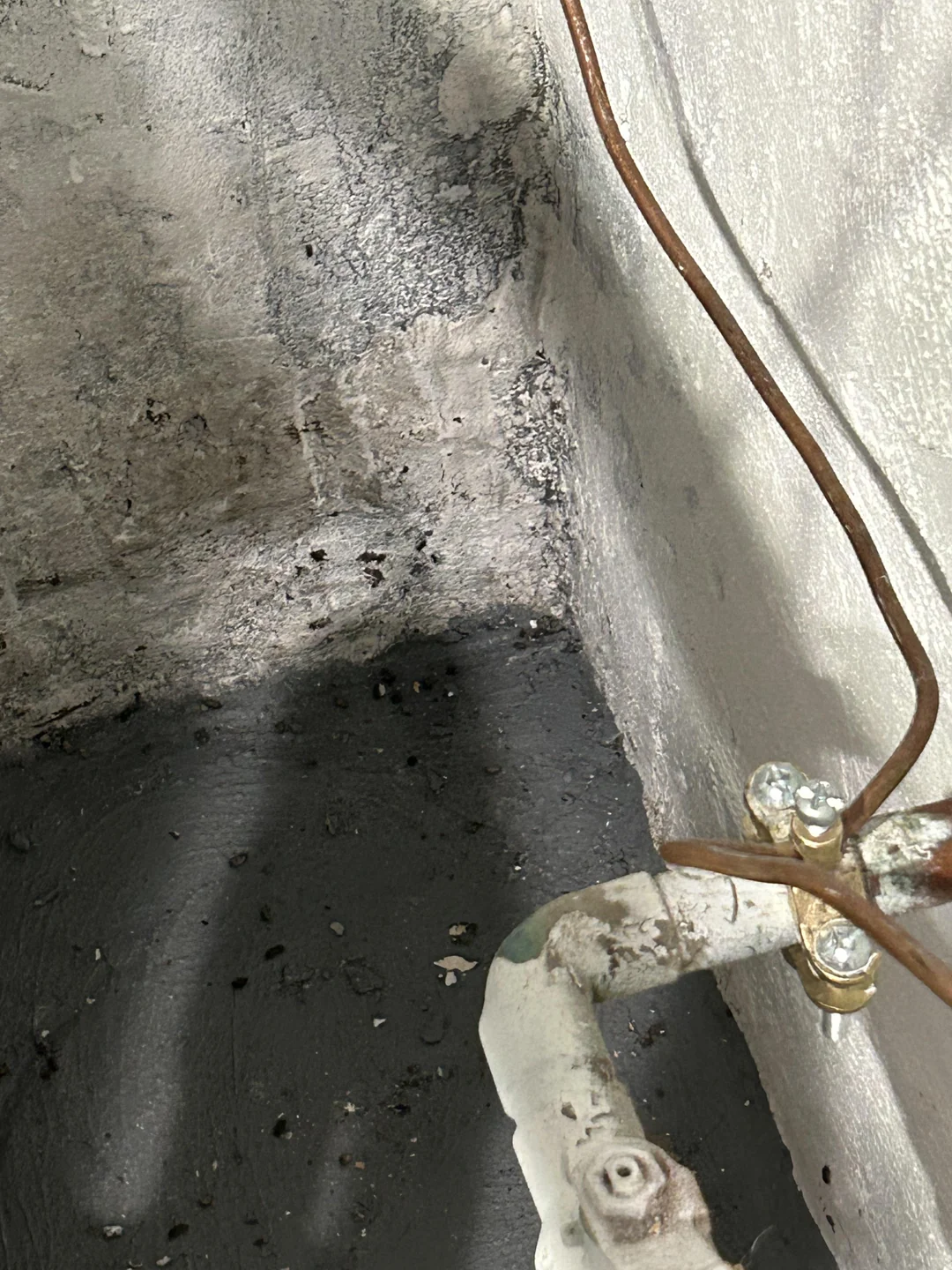
Look at the cove joint with a flashlight. The seam where the basement wall meets the floor is the single most common entry point in Portland. A dark line there is not condensation, and telling a crack problem from a pressure problem is the next thing to work out.
Read the humidity. A $12 hygrometer tells you what is coming. Under 50% is where you want to be. Above 60% and you will have mold before the rain stops in May, which is the same line the EPA’s brief guide to mold, moisture and your home (opens in a new tab) draws.
Walk the perimeter with a flashlight. Look at the cove joint, look for efflorescence, look for new cracks. Photograph anything you find, dated, so next year you have a comparison. The nine early signs are the list to check it against.
Buy this one thing
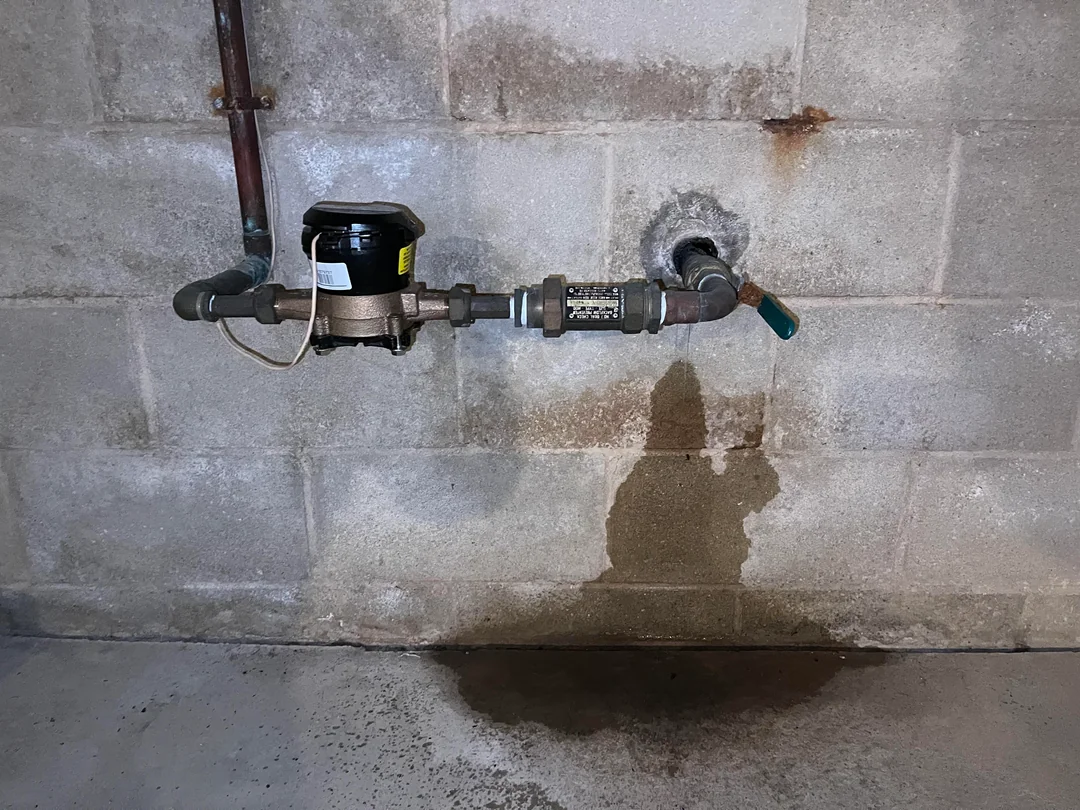
A Wi-Fi water sensor on the basement floor, about $20. It texts you when the floor gets wet. Every catastrophic basement flood we have responded to was made worse by nobody knowing for hours or days. Twenty dollars buys you that phone call.
When to bring us in
Call in early autumn, not in the middle of a January storm, if you see any of these:
- Efflorescence that returns after you clean it off
- A cove-joint stain that darkens a day or two into steady rain
- Any crack that has visibly widened since last year, which usually means injection while it is still small
- Floors above a crawl space that flex when you walk on them
- Humidity above 60% with a dehumidifier already running
- A wall that looks like it is bowing inward at all
September diagnosis is calm, cheap and scheduled. January diagnosis is none of those things. Book the free inspection before the wet season starts, and if you want to see what the work looks like on a real house first, the project write-ups have the before and after numbers. Budgeting is easier before the rush too, and the 2026 cost article gives you the ranges without having to ask anybody.