
Water in a basement after heavy rain usually comes in by one of seven routes: overflowing gutters, downspouts and ground that drain toward the house, window wells, the seam where the wall meets the floor, foundation cracks, groundwater rising under the slab, or a sewer line backing up. Each one has a different fix, so the useful first step is working out which path the water took, not buying a product for the puddle.
Where the water shows up, how soon after the rain starts, and what it smells like will usually narrow seven possibilities to one or two. If you would rather have someone trace it with you, that is what a basement waterproofing assessment from a local crew is for. Either way, start with safety.
During the downpour, or weeks into the wet season?
Timing is the first clue. Water that appears while rain is hammering down, or within a few hours, usually points to a source near the surface: a gutter spilling over, a downspout dumping next to the wall, a window well filling up.
Dampness that shows up after many days of steady rain behaves differently. Portland’s wet season stacks storm on storm. The National Weather Service climate book for Portland lists 1991 to 2020 airport normals of 5.45 inches in November, 5.77 inches in December and 5.03 inches in January, against an annual normal of 36.91 inches (NWS Portland precipitation tables (opens in a new tab)). When soil around a foundation stays wet for weeks, water can build up against the wall and under the floor, and a basement that stayed dry through October may start to seep in December.
That does not mean every leak waits for midwinter. A clogged gutter can flood a corner on the first big rain. Treat timing as a clue, not a verdict.
Water in basement after heavy rain: match the clue to the source
| Where and when you see it | Likely path | Where to read more |
|---|---|---|
| One corner, during the downpour, wall wet from the top | Gutter overflow or downspout dumping at that corner | Causes 1 and 2 below |
| Damp low on one wall, on the side where the yard or patio tilts in | Ground or paving sloping toward the foundation | Cause 2 below |
| Under or around a basement window | Window well filling or a failed window seal | Basement window leaks |
| A thin wet line where the wall meets the floor | Water reaching the cove joint | Floor-wall seam leaks |
| A narrow wet streak running down from one spot | Crack or pipe penetration in the wall | Cause 5 below |
| Damp patches in the middle of the floor, often late in the wet season | Groundwater pushing up through the slab | Water through the floor |
| Water rising from a floor drain, toilet or tub, often with odor | Sewer backup | Portland sewer backups |
Real basements can mix two of these, so log what you see before deciding.
Water from above: gutters, downspouts and the yard
1. Gutters that overflow
A gutter packed with leaves or sagging away from the fascia turns the roof into a waterfall aimed at the base of the wall. The clue is a wet patch that lines up with the gutter run above it, often with a stained or splashed strip of siding or a trench worn into the soil along the drip line. The EPA’s brief guide to moisture in the home lists cleaning and repairing roof gutters regularly (opens in a new tab) as a basic moisture-control step.
The fix is maintenance: clear the gutters and downspouts, check the pitch toward the outlet, and repair loose sections. If you are not comfortable on a ladder, hire a gutter service.
2. Downspouts and ground that drain toward the house
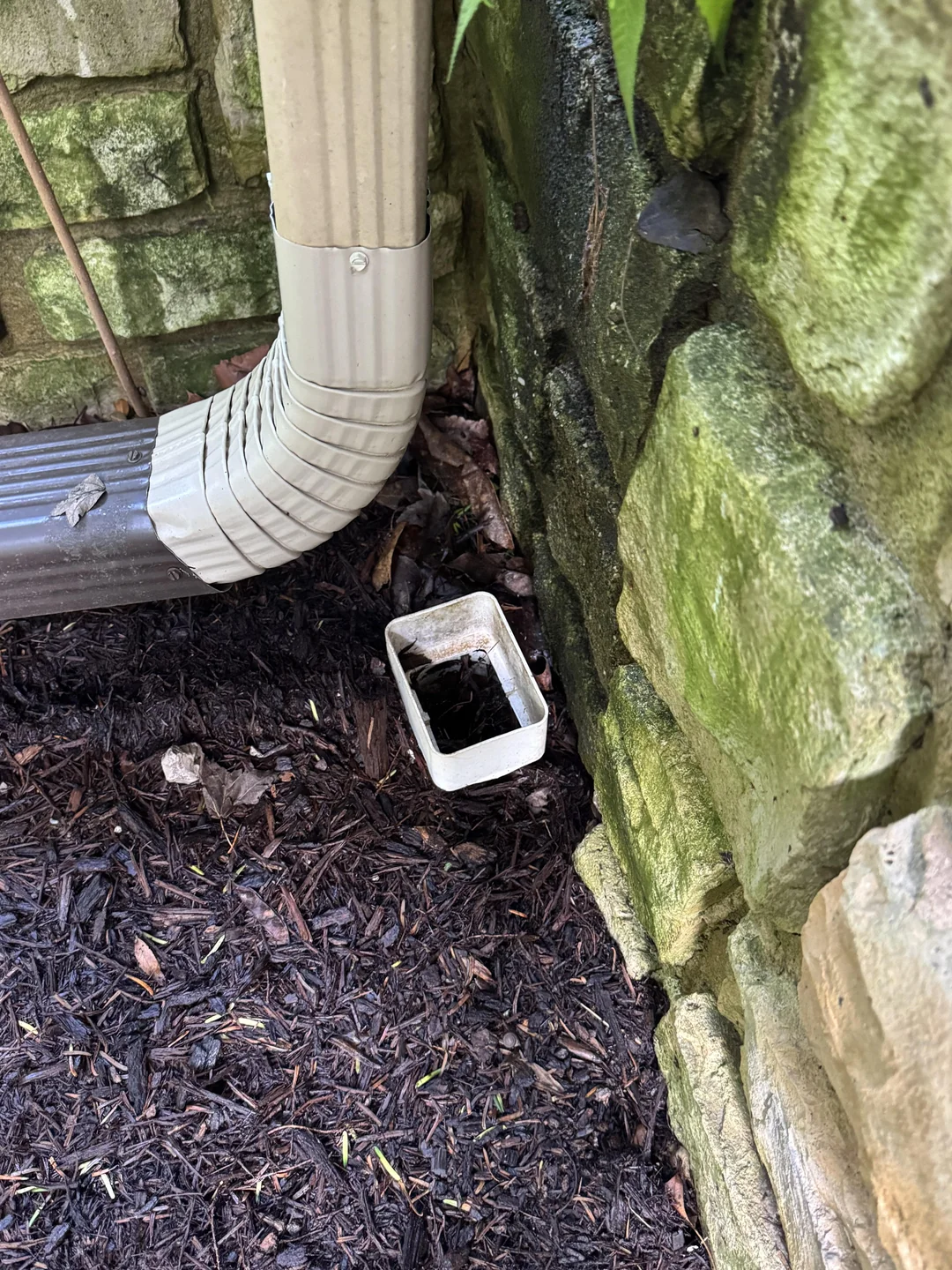
A downspout emptying beside the foundation concentrates a roof section’s rain in one spot. Ground that slopes toward the house does the same along a whole wall. The EPA guide says to make sure the ground slopes away from the building foundation (opens in a new tab). A patio, walkway or driveway that has settled toward the house counts too.
In Portland, how far water should go matters as much as whether it moves. As of October 2026, the City’s downspout disconnection guidance says to discharge water at least 6 feet from a basement (opens in a new tab), keep extensions back from property lines and sidewalks, and not disconnect on steep slopes. Never point water at a neighbor’s lot, a sidewalk or a slope. The details and the older buried downspout lines many houses have are covered in Portland’s downspout disconnection rules, and ground that falls the wrong way has its own guide on yards that slope toward the house.
3. Window wells
A window well collects whatever drains into it. If its drain is clogged or missing, water rises against the window and finds the gap around the frame. The clue is water under or beside the window during heavy rain, and leaves or soil packed in the bottom of the well.
Clearing debris often helps right away. Whether you also need a cover, a working drain or a rebuilt well depends on where the water is coming from, which the window well leak guide walks through. Do not climb into a flooded well to check it.
Water at the foundation: the seam, cracks and the slab
When the soil around a house is saturated, water presses on the foundation from the side and from below, and it comes in wherever the concrete offers the easiest path.
4. Where the wall meets the floor
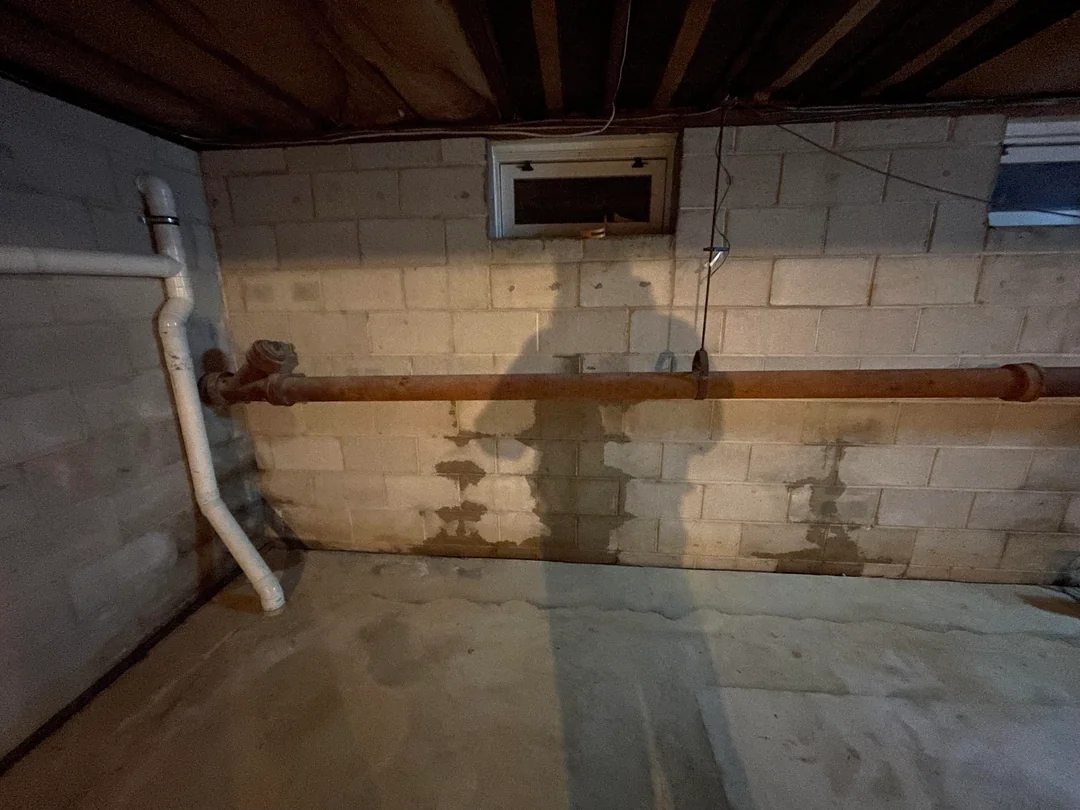
In many poured basements the wall and the floor slab are placed at different times, leaving a joint between them that is called the cove joint. When water builds up in the soil at the footing, that seam is often the lowest open path in. The clue is a damp line at the base of the wall, frequently along more than one stretch, while the wall face above stays dry. The full diagnosis, and why caulk at the seam rarely holds, is in the guide to basements leaking where the floor meets the wall.
5. Foundation cracks and pipe penetrations
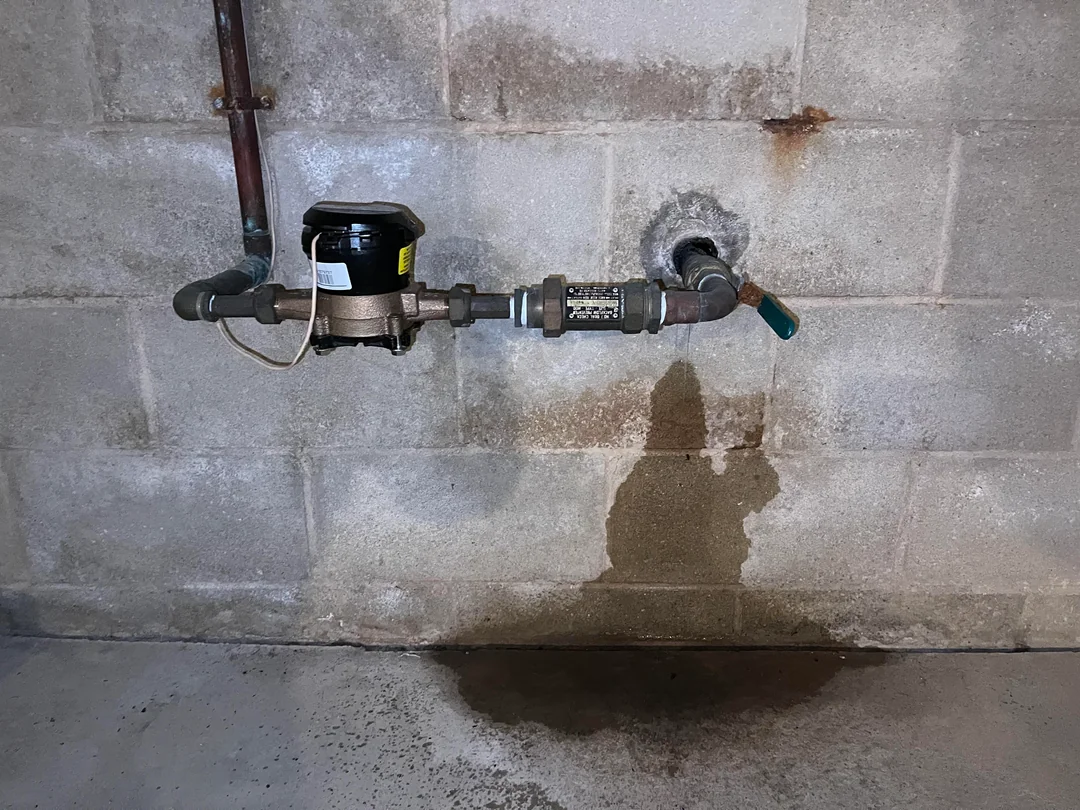
A crack or a gap around a pipe or tie-rod gives water a defined route through the wall. The clue is a narrow streak that starts at one spot and runs down, with the wall on either side dry. Single cracks can often be sealed on their own. Whether yours is cosmetic, a water path or a structural sign belongs on our basement crack repair page, and crack repair or full waterproofing covers how to tell a point leak from a wider drainage problem.
6. Groundwater pushing up through the slab
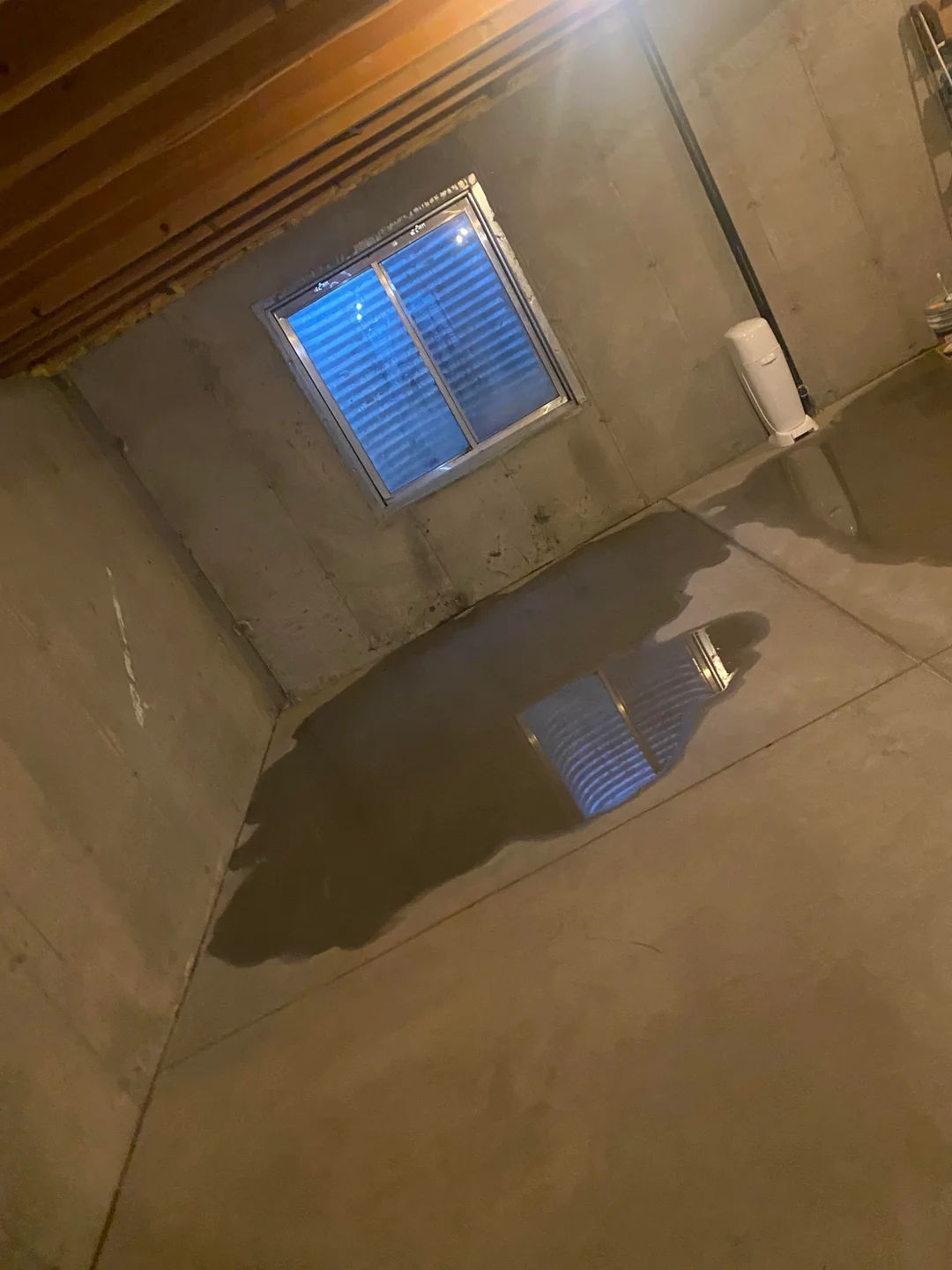
When water collects under the floor, it can push up through slab cracks, around pipes and posts, or at the floor drain. The clue is dampness in the middle of the floor rather than at a wall, often after a long wet stretch rather than a single storm. That is where hydrostatic pressure comes in, and it gets its own explanation in water coming up through the basement floor.
7. Water from the pipes: sewer backup
Sewer water is not rainwater, and it needs a different response. The City notes that many Portland homes send roof rain into its sewer and stormwater pipes (opens in a new tab), and that keeping it out helps prevent overflows and backups. Backups also happen when a line is plugged; Portland Environmental Services names wipes, garbage, debris and grease (opens in a new tab) as causes.
The clue is water coming up from a floor drain, toilet, shower or laundry sink, especially with an odor or debris. Keep out of it. Portland BES says to call a plumber first to investigate the cause, and it lists a 24-hour line for sewer emergencies, 503-823-1700, as of October 2026. The City also runs a Sewer Backflow Prevention Program for eligible homes in combined sewer areas, and the eligibility details are in the Portland sewer backup guide.
A safe self-check after the next storm
You need a record, not tools, made from somewhere dry and safe.
What does not fix it
A few common responses deal with the symptom and leave the source alone.
- Waterproof paint or sealer on the inside. A coating on the room side cannot hold back water that is under pressure from the soil side.
- Caulk or patching compound in the floor-wall seam. Water that is pushing in usually finds the next weak spot.
- A dehumidifier alone. It helps dry the air after you deal with the water. It does not stop water entering.
- A sump pump with nothing feeding it. A pump only removes water that reaches its pit.
How the fixes line up
The first three causes are often the cheapest to address. Clean gutters, downspouts routed within the City’s guidance and corrected grading reduce how much water reaches the foundation at all, so do those first and watch a few more storms.
When water keeps coming in at the seam or through the floor after the surface drainage is sorted, the usual professional answer is a drainage system that collects water at the footing level and moves it to a sump. How that compares with digging outside is laid out in interior vs. exterior waterproofing, and French drains vs. sump pumps explains how the two parts work together. If you are budgeting, keep to the cost guide rather than guesses from a single quote.
Once water is in, drying matters. The EPA advises drying water-damaged areas and items within 24 to 48 hours to prevent mold growth (opens in a new tab). After a sewer backup, follow the City’s cleanup guidance or hire a restoration company; that water carries health risks rainwater does not.
FAQ
Is a little water in the basement after heavy rain normal?
It is common, but not something to ignore. Even a small amount means water has a path in. Log it, fix what is visible outside, and have it looked at if it comes back.
Why did my basement stay dry for years and then leak?
Gutters fill, downspout lines clog or break, soil settles against the foundation, and an unusually wet run of weeks saturates the ground. A new leak in an old basement often means one path changed, not that the whole foundation failed.
Should I pump out standing water myself?
Only if the water is clean rainwater, shallow, nowhere near electrical equipment, and you are not standing in it while running anything powered. If any of that is uncertain, or the water could be sewage, keep out and call a plumber, electrician or restoration company.
Can one fix handle all seven causes?
No. A drainage system inside the basement can manage water reaching the foundation, but it does nothing for an overflowing gutter, a flooded window well or a sewer backup. Each entry path needs its own diagnosis, and many houses have more than one.
When to bring in a second set of eyes
If the water lines up with something outside and stops once you fix it, you may be done. If it keeps showing at the seam or through the floor, or you cannot match it to anything, a free on-site inspection can trace the path before anyone proposes a system. The signs that a basement needs waterproofing are a good list to check your notes against first.