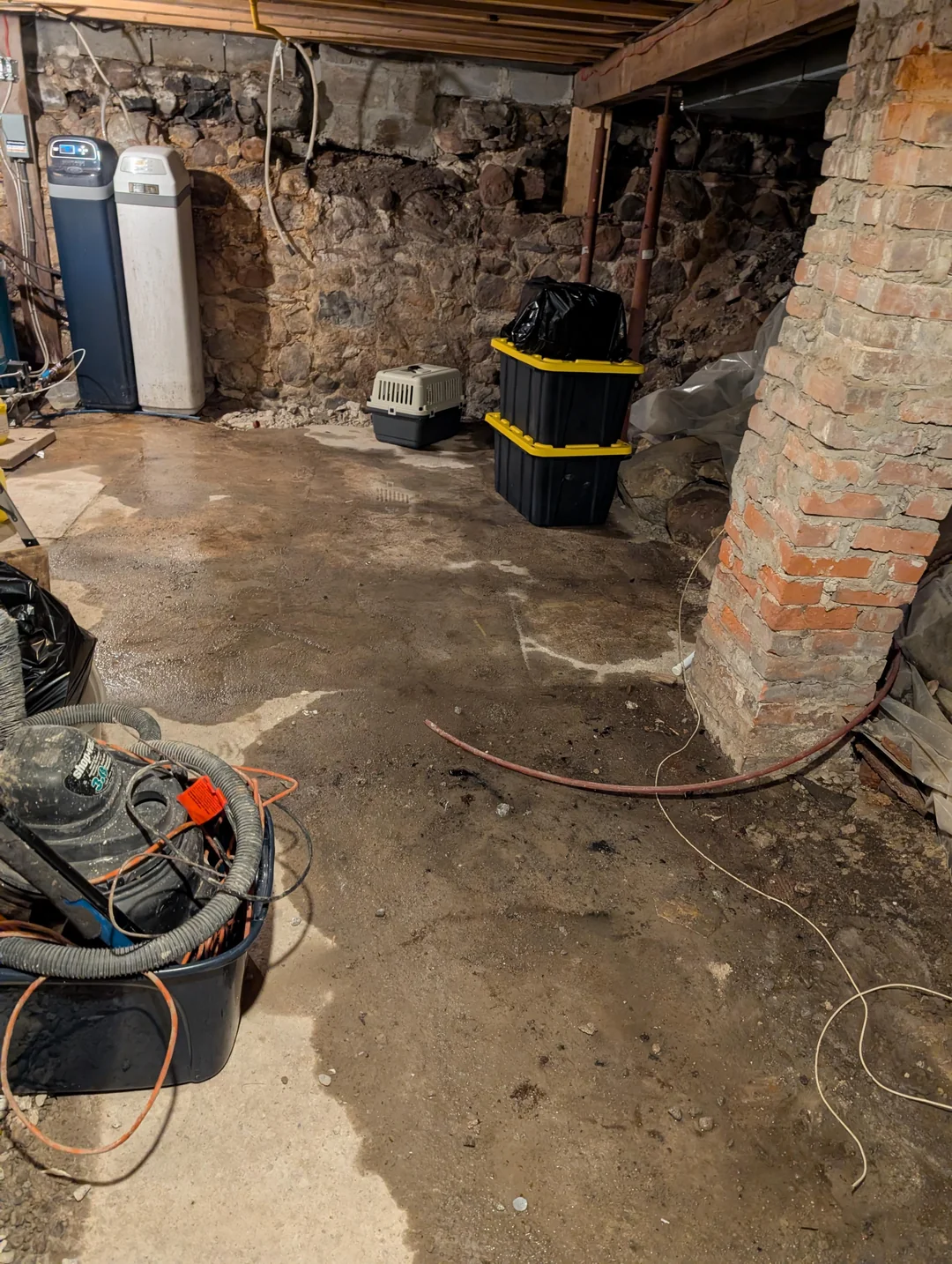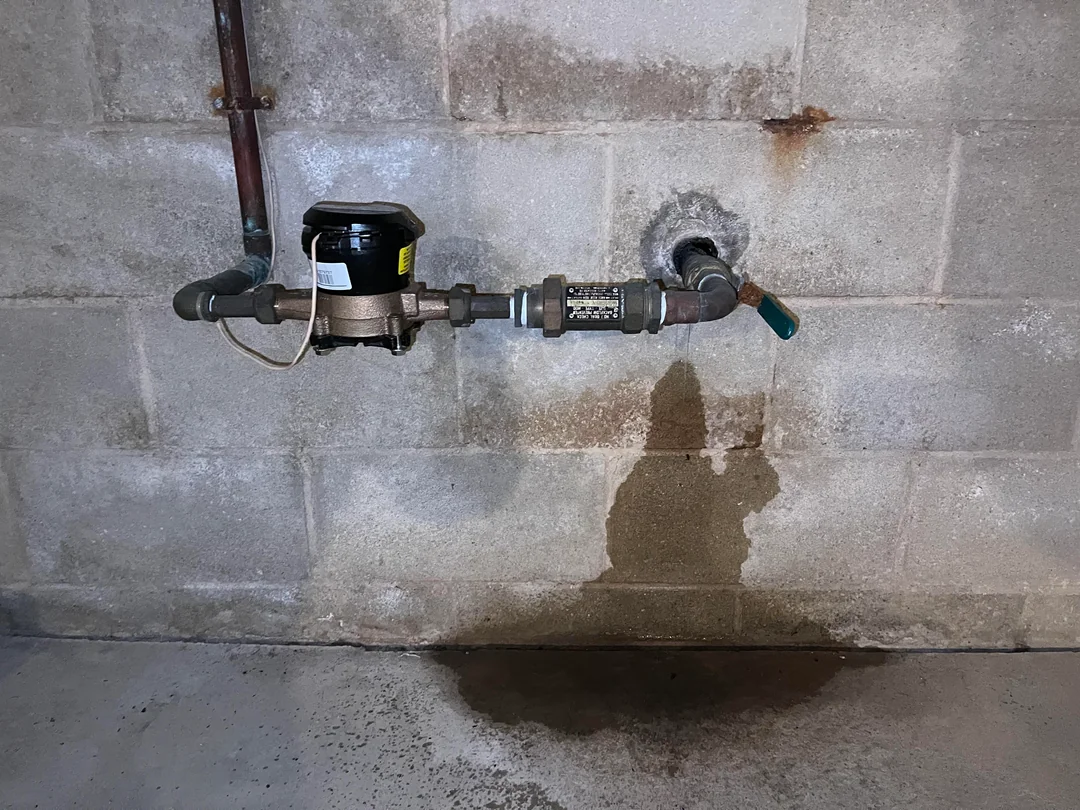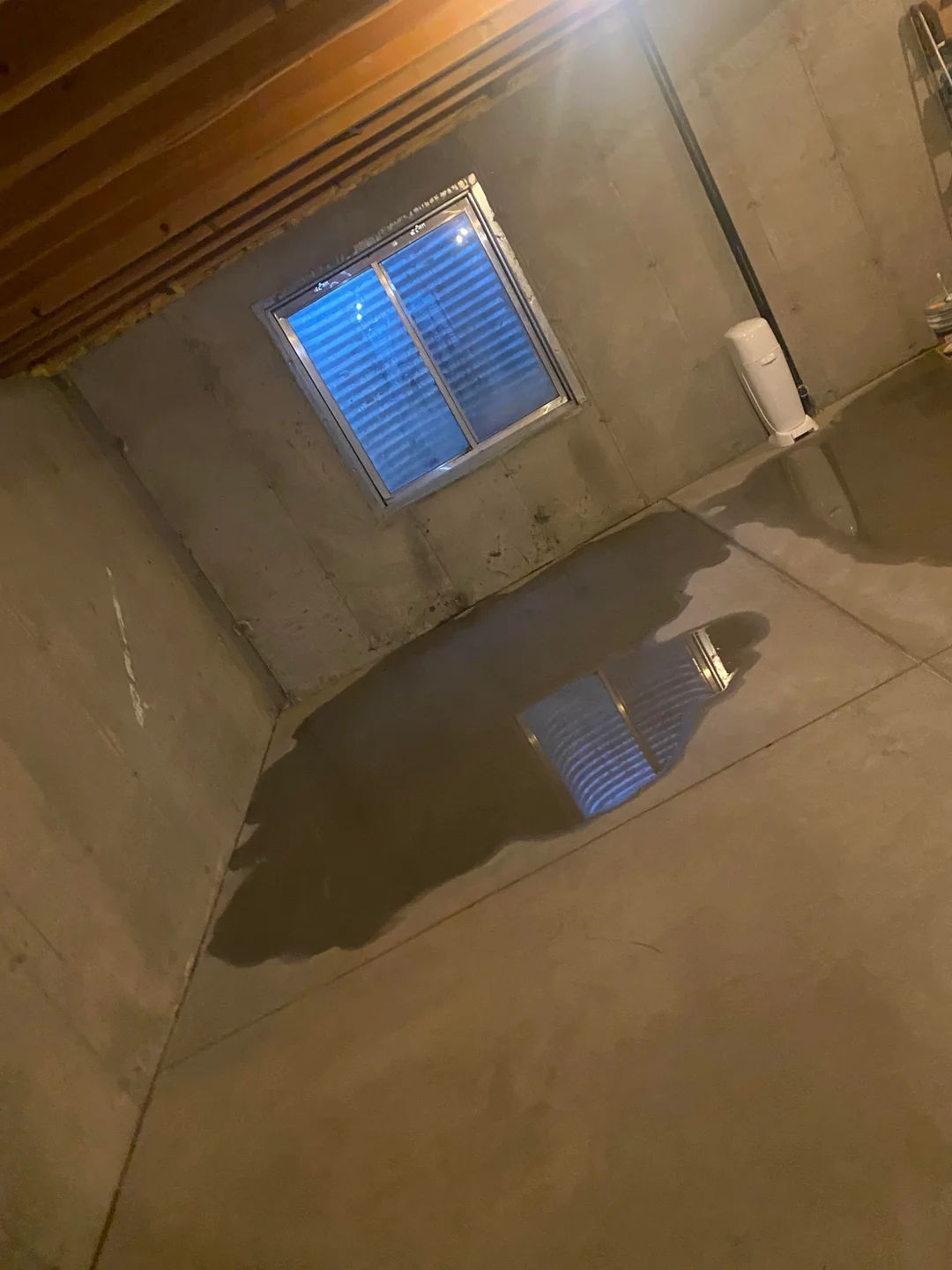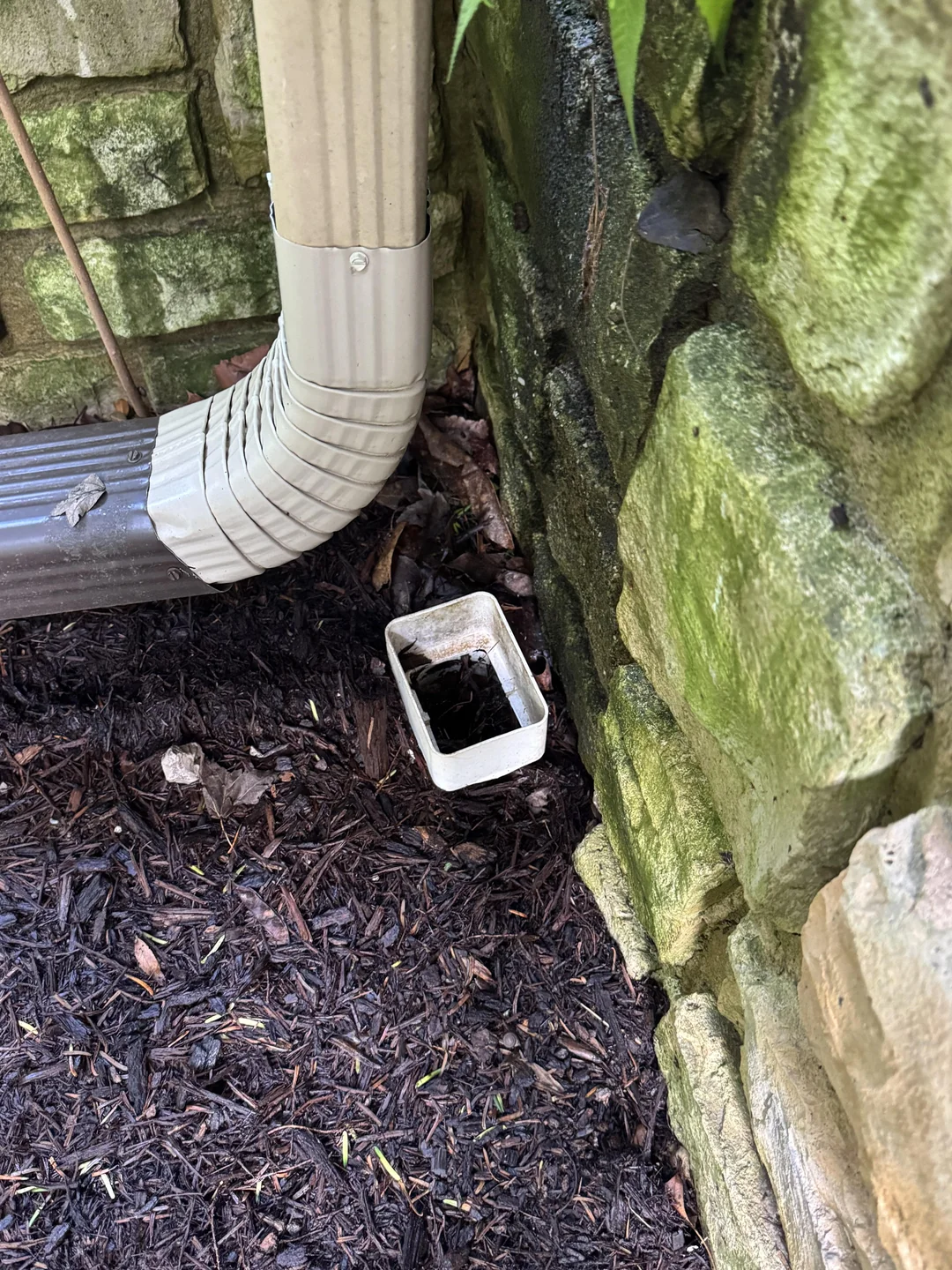
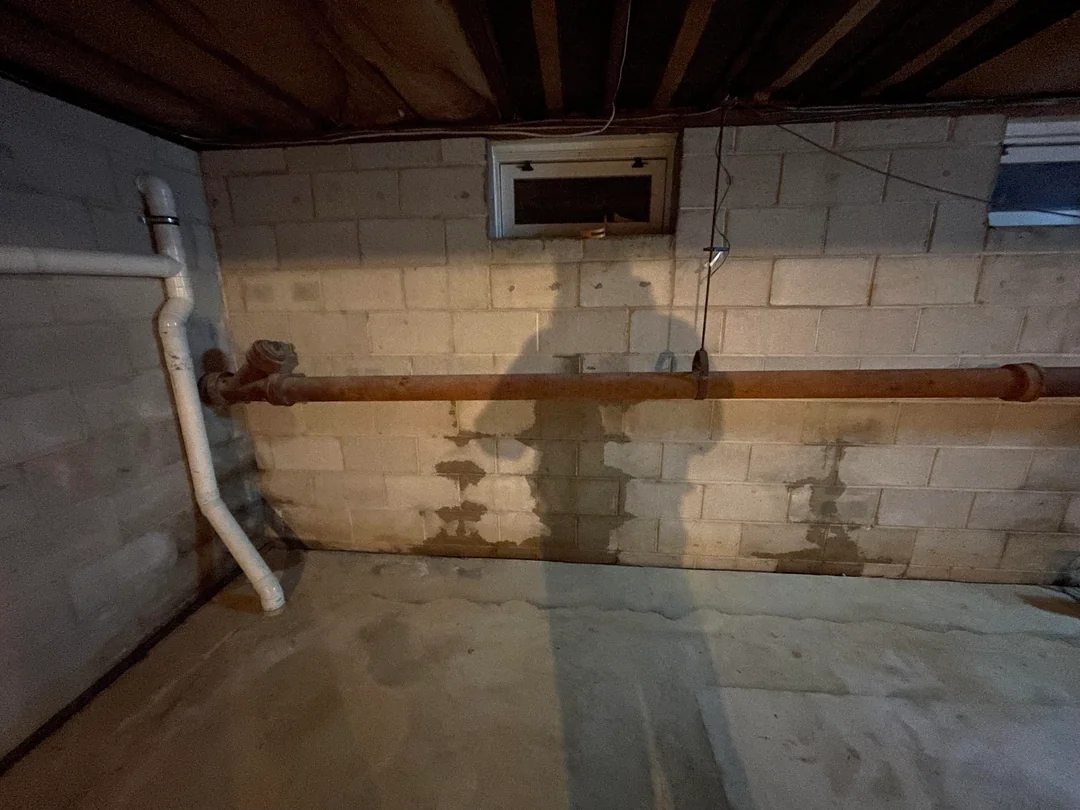
These are not two competing products. A French drain (opens in a new tab) collects water and carries it to one low point. A sump pump sits at that low point and removes it. Ask which one your basement needs and the honest answer is almost always both, since one without the other leaves half the job undone.
What a French drain actually does
A French drain is a perforated pipe bedded in stone, wrapped in filter fabric, set to a continuous downward slope. It does not stop water. It gives water flowing toward your foundation a path that is easier to follow than the path into your basement, and it carries that water to wherever the system is designed to send it, usually a sump pit.
Inside a basement, that channel runs along the base of the wall, just inside or under the slab edge, catching water at the cove joint before it spreads across the floor. Outside, at the footing, it catches water before it ever reaches the wall at all, which is the version exterior excavation installs .
What a sump pump actually does
The sump pump sits in a pit at the low point the drain feeds into, and it removes the water that collects there before the pit overflows. Without a pump, a French drain is just a collection point with nowhere to send what it collects, which fills up and stops working the first time it rains hard enough to matter.
A submersible pump with a float switch is standard. The float rises with the water level and triggers the pump automatically, so it runs only when there is actually water to move, not continuously.
Why you need both, not one or the other
A sump pump with no French drain feeding it only removes water that happens to reach the pit on its own, which is unreliable and slow. A French drain with no pump collects water and then has nowhere to put it once the pit fills. Interior drainage systems install both together for exactly this reason: the drain does the collecting, the pump does the removing, and neither one is a complete answer alone.
Interior drain vs. exterior footing drain
Both are French drains. The difference is where they sit and what they are catching.
- Interior drain tile runs inside the basement, at the base of the wall, and catches water after it has already reached the cove joint. It is the standard component of interior basement waterproofing .
- Exterior footing drain runs outside, at the base of the footing, and catches water before it reaches the wall at all. It is part of exterior excavation waterproofing , and it replaces an original footing drain that has usually silted up or was never installed to begin with on an older Portland foundation.
The full comparison of when each approach makes sense covers the decision in more depth than the drain type alone.
Why a battery backup is not optional here
The same storms that push the most water at your foundation also knock out power across Portland, and a sump pump with no backup fails at the exact moment it has the most work to do. A battery or water-powered backup keeps the pump running through an outage that can stretch for hours during a serious storm, and it is a small cost against what a flooded basement actually runs.
Maintenance and how long each part lasts
The pump is the mechanical piece, and like any appliance it has a service life, typically 7 to 10 years. The drain tile itself, the stone, filter fabric and pipe, has no moving parts and outlasts the house when it is installed with clean-out access at every corner, so it can be flushed rather than dug up if it ever needs attention.
Getting the sizing right
An undersized pump or a drain with too shallow a slope both fail the same way: slowly, then all at once during the storm that finally exceeds what the system can handle. A free inspection sizes both pieces to your actual square footage and roof area rather than a standard kit, and if you are trying to work out whether your situation needs this combination at all, the nine signs a basement shows first is the place to start.