Most Portland basements get fixed from the inside. Interior drain tile and a sump pump handle the great majority of what we see, and the ground never has to get dug up. Exterior excavation is the right call in a smaller set of cases, and it is worth knowing which one applies before you sit through two very different sales pitches.
What interior basement waterproofing actually is
A channel is cut along the inside edge of the basement floor, at the base of the wall. Drain tile goes into that channel on a bed of stone, runs to a sump pit, and a pump sends the water out through a discharge line. The wall itself gets a vapor barrier or dimple board where needed. Nothing outside the house changes.
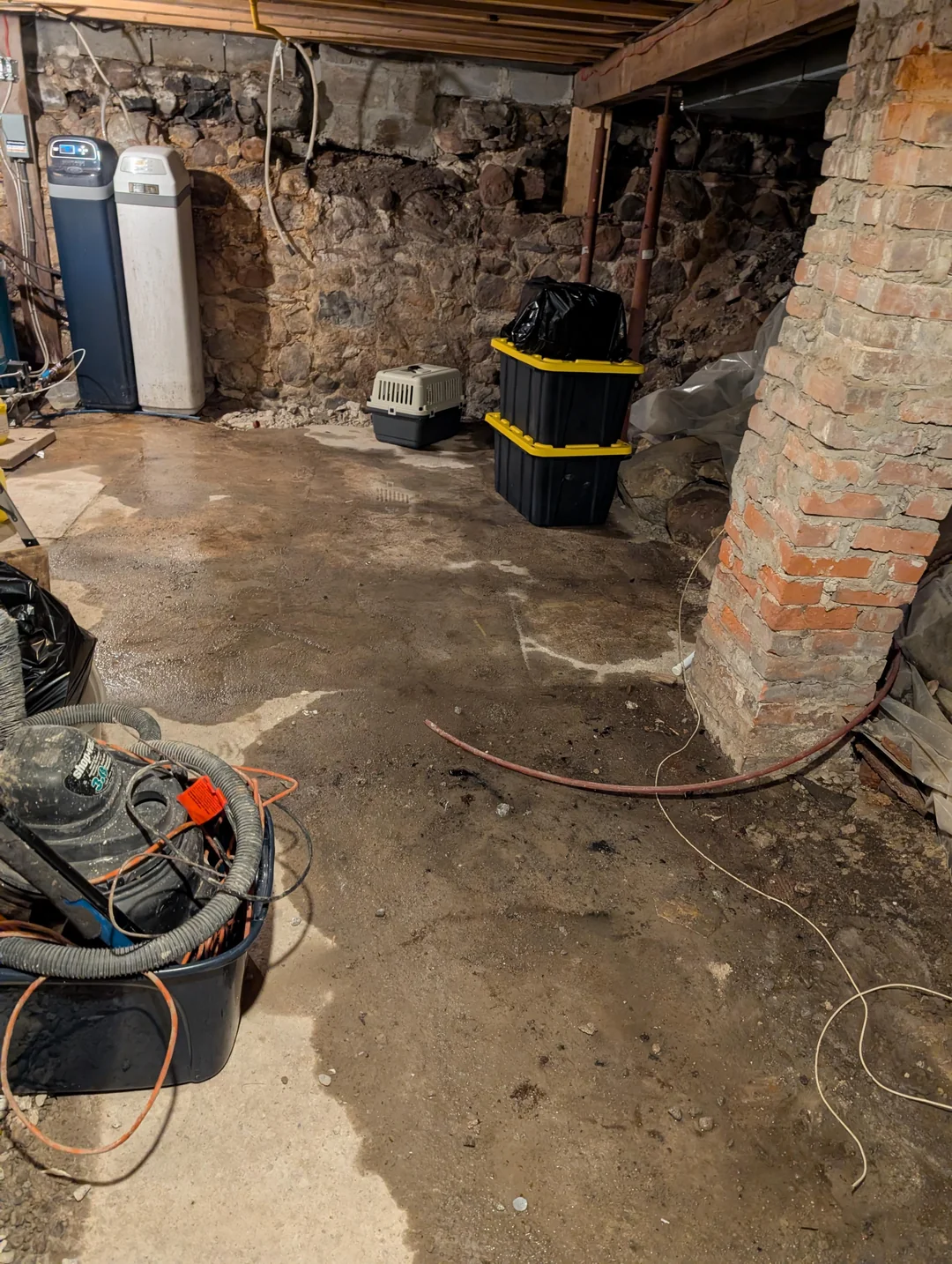
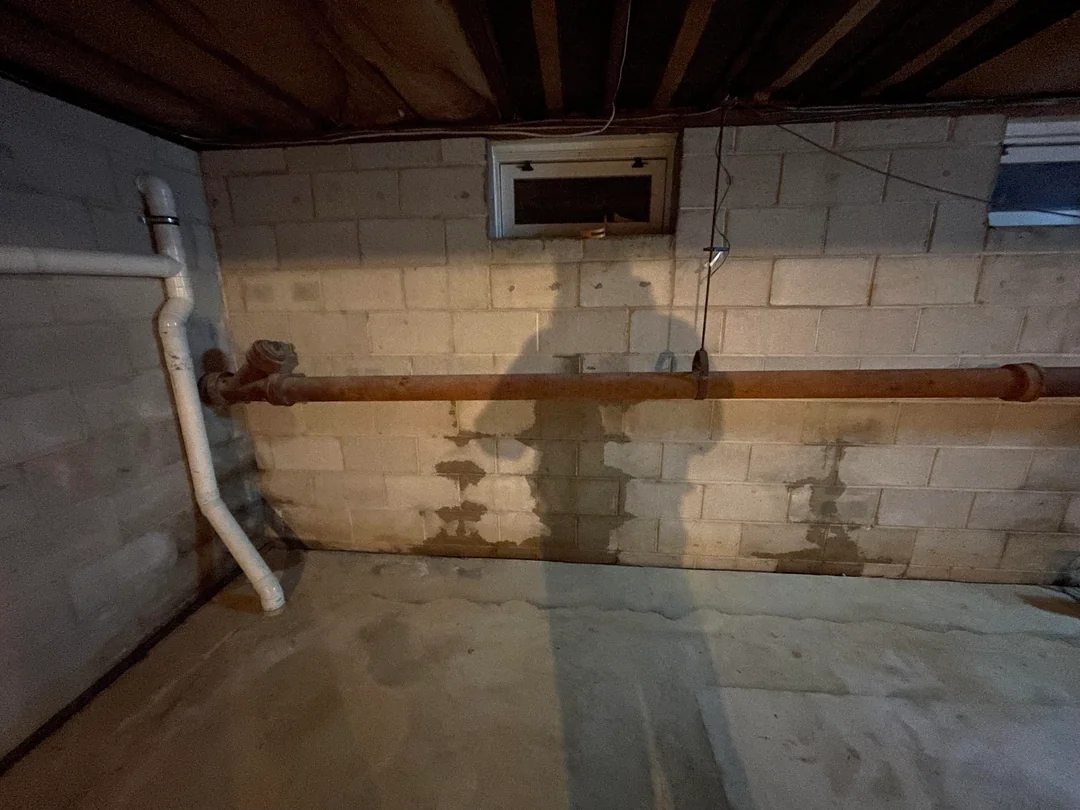
It works because most basement water in this city arrives at the same low point: the cove joint, where the wall meets the floor. Interior drainage catches it right there, at the point of entry, rather than trying to stop it before it reaches the wall at all.
What exterior basement waterproofing actually is
The soil around the foundation gets excavated down to the footing, on the affected run of wall. A waterproof membrane and dimple board go against the concrete, a new footing drain gets tied in at the base, and the trench is backfilled with washed drain rock before the yard is restored. The Irvington exterior waterproofing project shows what that looks like start to finish.
It stops water before it ever reaches the wall, which is a real advantage. It is also disruptive, and touches landscaping, walkways or a driveway that interior work never comes near.
When interior drainage is the right call
- The water enters at the cove joint or through the wall itself, not from a structural gap
- The yard, patio or driveway above the affected wall is finished and you want it to stay that way
- The basement will get finished afterward, since interior systems sit inside a stud wall with no visible trace
- You want the job done in 2 to 3 days rather than a multi-day excavation
This describes the majority of Portland jobs we quote. Basement crack repair is the narrower version of this same logic, sealing one or two defined openings instead of running drain tile along the whole perimeter.
When exterior excavation is worth it
- A wall is bowing or showing structural stress that needs address from outside, not just sealing from inside
- The membrane at grade has failed and water is entering above the foundation line, not at the cove joint
- Hardscaping is already scheduled to be torn out and repoured for unrelated reasons, so the dig is free
- The house has no accessible basement interior to work from, such as a slab-on-grade addition tied into an older foundation
That last group is genuinely small. Most of our exterior jobs happen because the yard was already going to be opened up anyway, the way it did on the Irvington project above.
Cost and disruption, side by side
| Interior drainage | Exterior excavation | |
|---|---|---|
| Typical cost | $72 to $98 per linear ft | Higher, driven by excavation depth and backfill |
| Time on site | 2 to 3 days | Several days to a week, weather permitting |
| What it disturbs | Basement floor perimeter only | Landscaping, walkways, sometimes a driveway |
| Fixes hydrostatic pressure? | Yes, by relieving it at the cove joint | Yes, by stopping water before the wall |
| Works with a finished basement? | Yes | Only where the affected wall is unfinished or reopened |
The full breakdown of what moves each number goes deeper into access, depth and landscaping restoration than this table can.
Why Portland leans toward interior work specifically
The soil here holds water against a foundation from October through May rather than draining between storms, so hydrostatic pressure (opens in a new tab) is close to a constant condition for half the year. Interior drainage relieves that pressure at the point where it actually causes a problem, which is why it solves the majority of cases without needing to touch the soil that is creating the pressure in the first place. Exterior work makes more sense where the goal is keeping water off the wall entirely, usually because something structural is also going on.
Work out which one applies to your house
A forty-minute inspection settles this with a hose test and a look at the wall from both sides, rather than a guess from a driveway estimate. If you want to see whether the fix might be smaller than either of these, the nine signs a basement shows first and the difference between a crack and a pressure problem are both worth reading first.
If you are leaning toward doing some of this yourself, what DIY actually fixes and what it does not is the honest version of that question. If the exterior route looks like yours, how the excavation process actually runs walks it step by step, and how a French drain and a sump pump split the work explains the two components almost every interior system depends on.
Book the free inspection and get the answer for your specific foundation instead of a general rule.