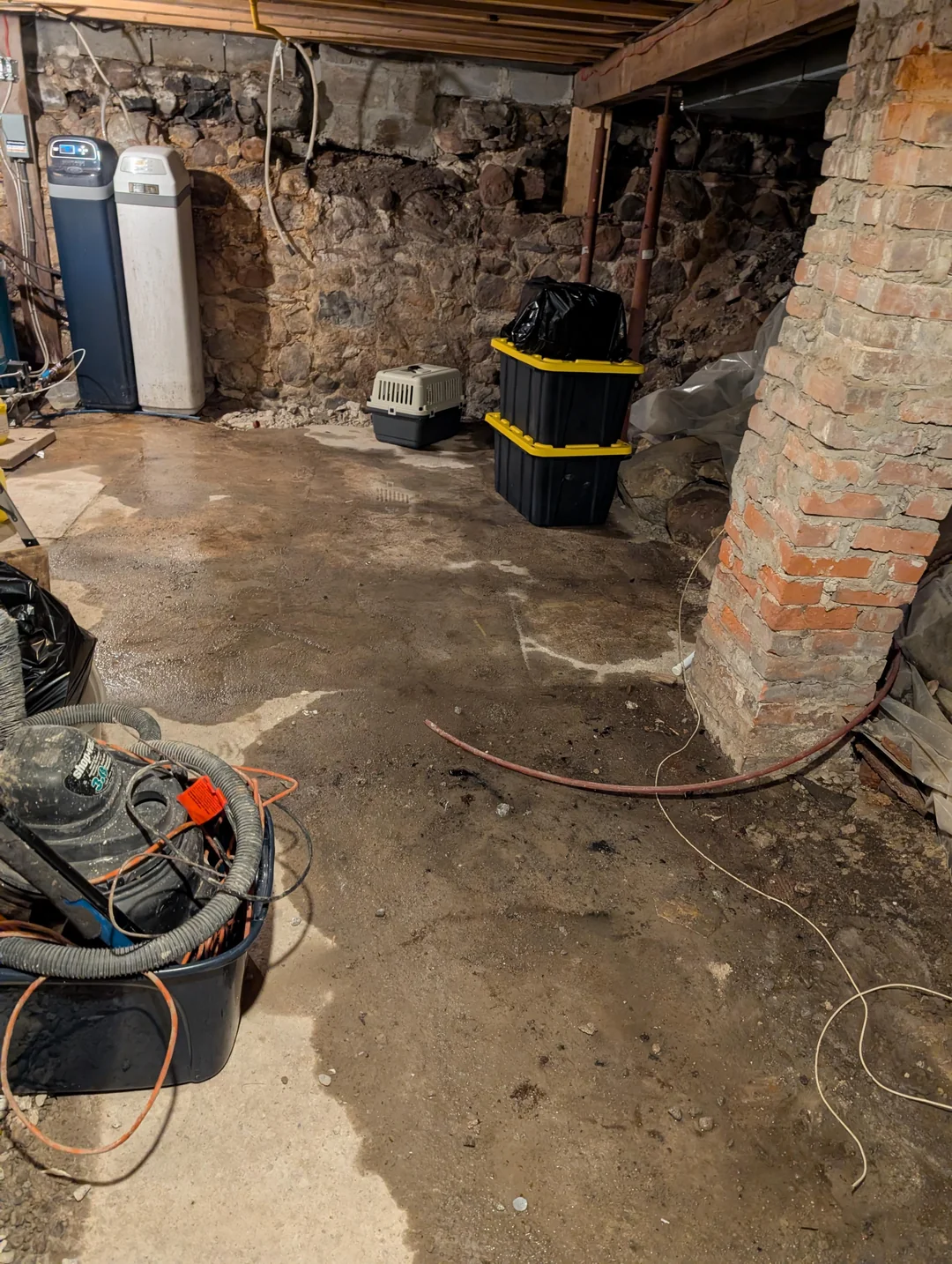
Interior drainage runs $72 to $98 per linear foot and finishes in 2 to 3 days. Exterior excavation costs more, usually by a wide margin, and takes longer, because digging to a footing and restoring what sits above it is a different scale of work than cutting a channel along a basement floor. Here is exactly where that extra cost goes, so a higher exterior quote makes sense instead of just feeling expensive.
Cost, side by side
| Interior drainage | Exterior excavation | |
|---|---|---|
| Price driver | Linear footage of wall treated | Depth to footing, soil type, backfill volume |
| Typical range | $72 to $98 per linear ft | Commonly 1.5 to 3 times the interior rate per foot |
| What sets the low vs. high end | Access, whether the basement is finished | Excavation depth, whether hardscape needs to be broken out and repoured |
We do not publish a single fixed exterior number, because depth to footing varies more between Portland houses than basement finish does, and a number that ignores that variation is not a useful one. The free inspection measures your specific depth before anyone writes a price.
Time on site
Interior work is contained and predictable: 2 to 3 days for most jobs, since nothing outside the building is involved and rain never affects the schedule. Exterior work runs 3 days to a week or more, depending on how much needs to be dug, whether shoring is required at depth, and whether the weather cooperates with an open trench.
What each one disturbs
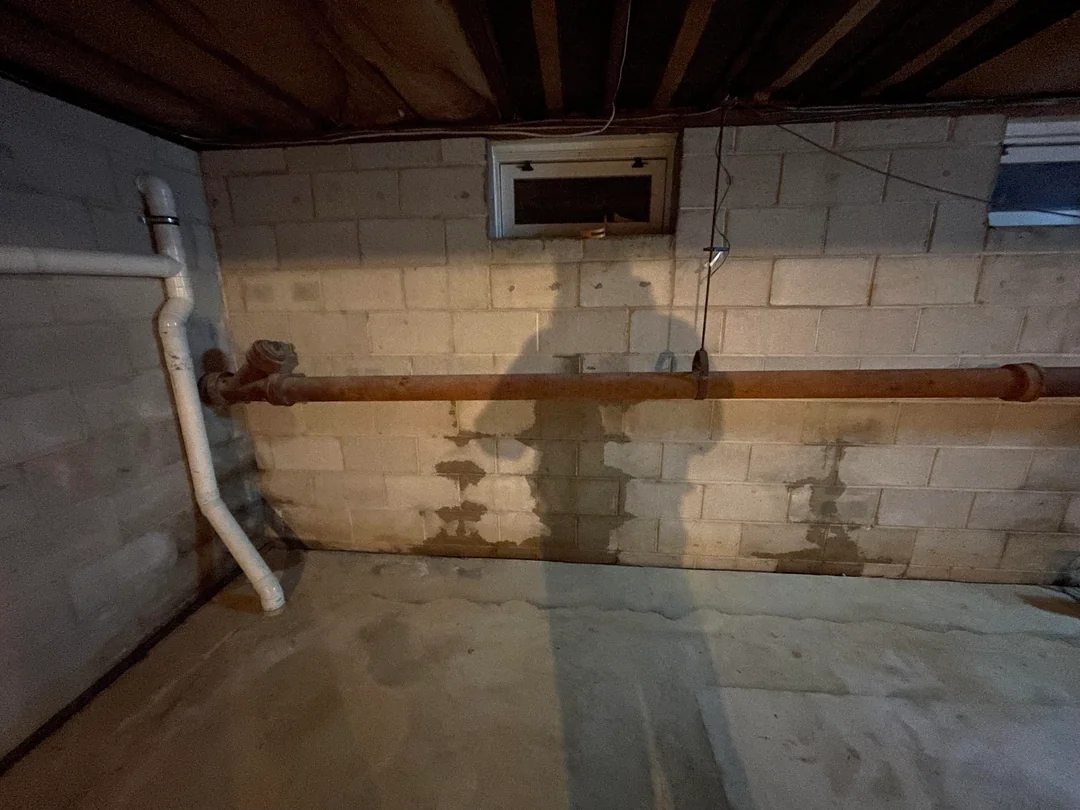
Interior drainage disturbs a strip along the inside of your basement floor. If the basement is finished, that strip of flooring and drywall comes out and gets restored afterward. Nothing outside changes at all.
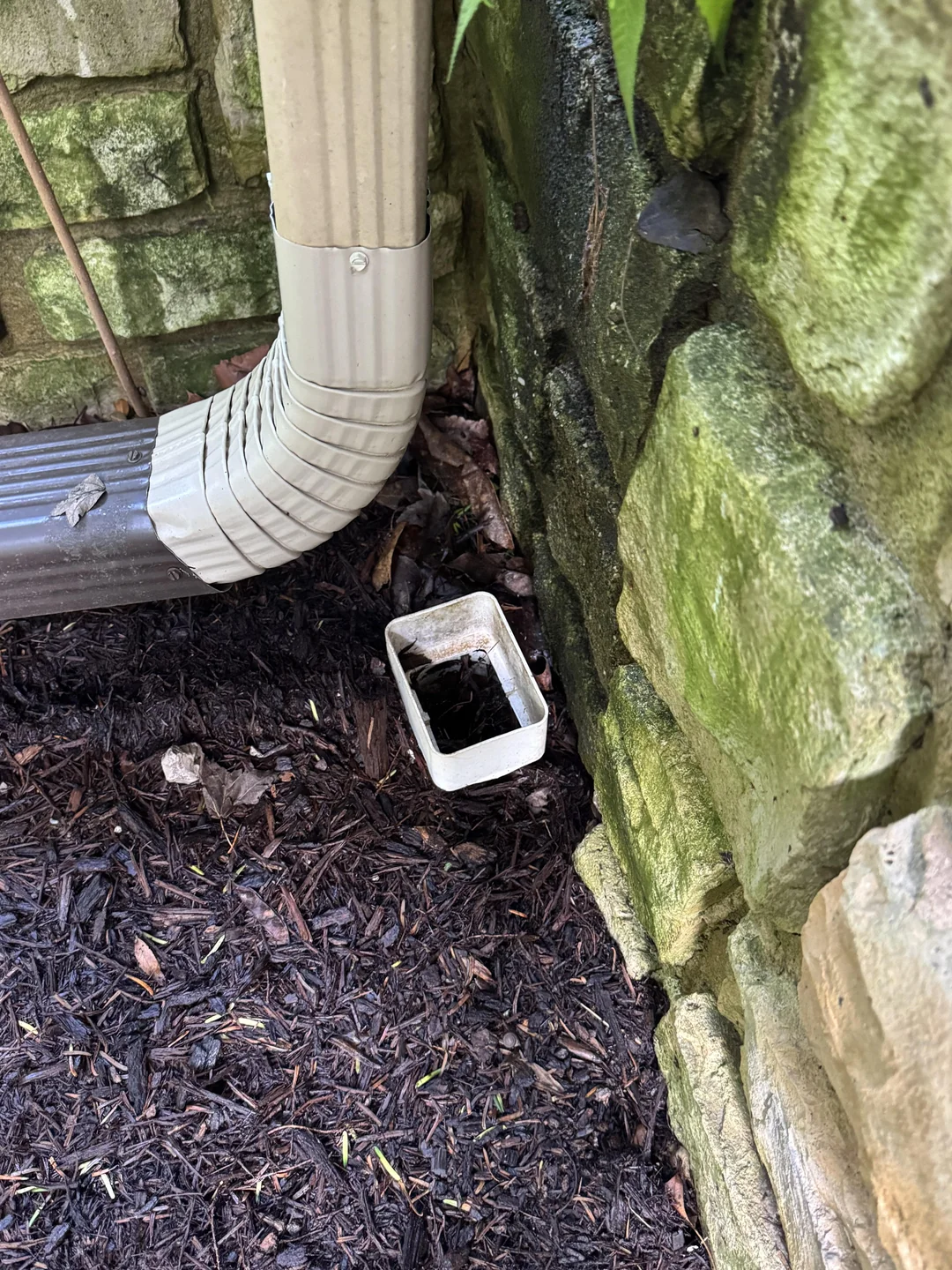
Exterior excavation disturbs the yard, and often more than just the yard. A driveway, patio or walkway sitting above the trench line has to come out and get repoured, not just re-graded, which is real money on top of the waterproofing itself. The Irvington project avoided that added cost specifically because a driveway and patio replacement were already scheduled, so the excavation for the waterproofing rode along with work that was happening anyway.
Where the extra exterior cost actually goes
Excavation equipment and labor. Digging by hand to a footing five to eight feet down takes considerably longer than a machine, but a machine needs room to maneuver that not every Portland lot has, which sometimes forces hand digging regardless of cost.
Shoring at depth. A trench deep enough to require it adds both material and time that a shallow interior channel never needs.
Backfill material. Washed drain rock, not the native dense clay (opens in a new tab) that came out of the ground, and that rock has to be trucked in and the spoil trucked out.
Landscaping and hardscape restoration. This is usually the single largest swing item, and it is also the one a lowball quote most often leaves out entirely, which is worth checking for specifically before you compare two numbers.
When paying more for exterior is worth it anyway
If a wall needs structural attention as well as sealing, the stabilization work has to happen with the wall already exposed, and doing both while the trench is open costs less in total than sealing it now and excavating again later for the structural fix. The same logic applies to the Irvington case above: paying for exterior work when the ground is already open costs roughly what interior work alone would have, because the marginal cost of the dig itself is the only real premium once excavation is already happening for another reason.
Getting the number that actually applies to your house
The full method comparison covers which approach fits which situation. Once you know which one applies, the free inspection measures your specific wall length or excavation depth and returns a fixed price in writing, not a range pulled from an article. Financing terms apply the same way to either method if the number is larger than you budgeted for.